English
 Français
 Español
 Português
 عربى
عربى 日本語
日本語 한국어
한국어 русский
PBT vs POP vs Tubular Bandage: Application Comparison Guide
Content
- 1 PBT vs POP vs Tubular Bandages: What I Compare First in Real Orders
- 2 Application Comparison by “Clinical Task” (Not by Material)
- 3 Hands-On Application Differences That Affect Patient Outcomes
- 4 Buyer-Friendly Comparison Table: Which Bandage for Which Application?
- 5 How Customers Combine These Products (Smart Assortment Planning)
- 6 What I Recommend You Verify Before Placing a Bulk Order
PBT vs POP vs Tubular Bandages: What I Compare First in Real Orders
When customers ask for an “application comparison” of PBT, POP, and tubular bandages, I don’t start with brand names—I start with the clinical job to be done. These three products are often purchased by the same distributor or hospital group, but they solve different problems: controlling bleeding and securing dressings (PBT), immobilizing fractures and post-op positioning (POP), and providing light support or holding dressings comfortably on limbs and joints (tubular).
As a manufacturer and supplier, my goal is to help you stock the right mix so your end users get consistent results and you reduce complaints like slipping wraps, poor molding, skin discomfort, or “too slow / too fast” setting during casting.
If you want to review the product ranges we supply, you can see our PBT bandage product, POP bandage product, and tubular bandage product.
Application Comparison by “Clinical Task” (Not by Material)
PBT bandage: pressure + securement for trauma and wound management
In practice, PBT bandage is selected when the priority is controlled pressure over a wound plus reliable fixation during movement or transport. This is why you’ll see it specified in emergency kits, ambulances, and first aid programs—especially where speed and consistency matter.
- Bleeding control and compression over lacerations or puncture wounds
- Securing a wound pad and maintaining pressure during transfer
- Field use where closures help prevent loosening (common request from EMS buyers)
From a purchasing viewpoint, you’re usually balancing ease of application, comfortable compression, and reliable hold. If you need to compare variants we supply, start from our PBT bandage product page and shortlist by closure style, conformability, and intended setting (clinical vs field).
POP bandage: rigid immobilization for fracture care and orthopedics
POP (plaster of Paris) bandage is the workhorse when your end users need a cast that molds smoothly and holds a limb in a stable position. The performance questions here are different: setting behavior, molding feel, strength after curing, and patient comfort under the cast.
- Emergency casting for suspected fractures when a rigid shell is needed quickly
- Orthopedic immobilization for limbs, joints, or post-op positioning
- Applications where clinicians value a smooth, shapeable finish
In our standard POP production, buyers frequently request a setting window around 4–7 minutes so staff can position and contour without delaying workflow, especially in busy outpatient departments. You can see our POP range and common widths on our POP bandage product page.
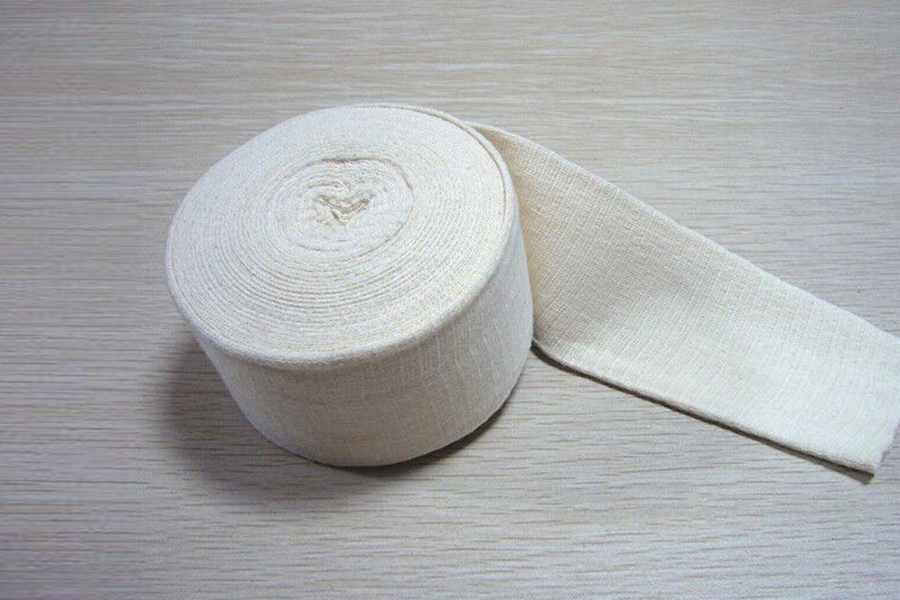
Tubular bandage: comfortable retention and light support
Tubular bandage is what I recommend when the clinical need is comfortable, even support and dressing retention—without the bulk or complexity of multi-layer wraps. Its tubular knit design makes application fast over fingers, limbs, and joints, which is why it’s popular in clinics, sports medicine, and home-care channels.
- Holding primary dressings in place on arms, legs, elbows, knees, or hands
- Light support for minor sprains and soft-tissue injuries
- Reducing edge pressure points compared with some wrapped bandages
Many customers specify latex-free tubular options to broaden compatibility for sensitive skin users, and they often ask for multiple sizes to cover everything from small digits to larger limbs.
Hands-On Application Differences That Affect Patient Outcomes
Product specs matter, but what causes returns and complaints is usually application behavior: slipping, uneven pressure, poor conformity around joints, or discomfort after a few hours. Here’s how I coach buyers to think about “application feel” in the field.
Working time and workflow impact
POP casting is the most time-sensitive in the trio. If the setting is too fast, staff lose time correcting wrinkles; too slow, and the room backs up. In practical casting workflows, a predictable 4–7 minute setting window is often a sweet spot because it supports positioning, smoothing, and edge finishing without excessive waiting.
PBT and tubular bandages are less about “setting” and more about tension control. With PBT, the user is applying purposeful pressure; with tubular, the user is choosing the right diameter and length so the bandage sits evenly without constricting.
Conformability around joints
- POP: excellent molding for contours, but technique matters—creases can become pressure points.
- PBT: designed to wrap and hold pressure; best results come from even overlap and secure closure.
- Tubular: easy around elbows/knees because there is no “wrap edge,” helping comfort during motion.
A practical example (what end users actually do)
Consider three common requests from buyers:
- Emergency department: suspected wrist fracture → POP bandage for a rigid cast shell after padding.
- Ambulance kit: deep cut with active bleeding → PBT bandage for direct pressure and stable securement during transport.
- Sports clinic: minor ankle sprain + dressing retention → tubular bandage for comfortable hold and light support.
If your catalog tries to “force-fit” one bandage into all three scenarios, you’ll see more end-user dissatisfaction. Stocking the right trio reduces misuse.
Buyer-Friendly Comparison Table: Which Bandage for Which Application?
| Comparison point | PBT bandage | POP bandage | Tubular bandage |
|---|---|---|---|
| Primary job | Pressure + wound securement | Rigid immobilization (casting) | Dressing retention + light support |
| Time-critical factor | Fast application, stable closure | Setting behavior (e.g., 4–7 min target) | Correct size + even placement |
| Best channels | EMS, military, trauma kits, first aid | Hospitals, orthopedics, emergency care | Clinics, sports medicine, pharmacy, home care |
| Comfort focus | Balanced pressure without slippage | Breathability + smooth finish under cast care | Seamless feel and gentle compression |
| Common sizing request | Widths matching trauma protocols and kit layouts | Multiple widths to cover digits to full limbs | Multiple diameters/lengths for body parts |
| What to avoid | Over-tightening without monitoring distal circulation | Inconsistent plaster distribution or unpredictable set | Wrong size leading to constriction or sliding |
My rule of thumb for buyers: if the requirement statement includes “immobilize,” “cast,” or “fracture stabilization,” start with POP. If it includes “pressure,” “bleeding,” or “trauma kit,” start with PBT. If it includes “secure dressing,” “comfortable,” or “light support,” start with tubular.
How Customers Combine These Products (Smart Assortment Planning)
Most successful distributors don’t treat these bandages as substitutes; they bundle them by clinical pathway. That’s how you increase fill-rate without overstocking.
Orthopedic pathway: POP + retention support
POP bandage typically sits in a casting set with padding and other supporting items. Tubular bandage is often purchased alongside to improve dressing retention and comfort for certain soft-tissue situations before or after rigid immobilization decisions are made.
First aid / emergency pathway: PBT + simple retention
PBT is a natural fit for trauma and emergency response kits because it helps users apply firm, even pressure quickly. Tubular bandage can complement those kits for situations where the goal is simply holding a dressing comfortably on a limb after bleeding is controlled.
Sports medicine pathway: tubular as the “daily-use” option
In sports medicine, tubular bandage is frequently the highest-rotation SKU because it’s fast to apply and comfortable for repeated use. POP is used less frequently and mainly when immobilization is required; PBT is kept for acute incidents and first-aid readiness.
What I Recommend You Verify Before Placing a Bulk Order
Buyers often focus on unit price, but total cost is driven by usability, consistency, and claims risk. Here are practical checkpoints I discuss with distributors and hospital procurement teams.
Consistency and user experience
- POP: stable setting window, uniform plaster distribution, and smooth molding feel across batches
- PBT: reliable elasticity/pressure behavior, secure fastening, and a wrap that doesn’t “creep” during movement
- Tubular: consistent sizing, good elastic recovery, and comfortable wear without edge irritation
Packaging and readiness
For high-volume clinical settings, the most requested packaging features are the ones that save staff time and reduce waste: individually sealed rolls for POP, easy-to-store boxed quantities, and ready-to-use packaging where required by the channel. For tubular, many customers prefer options that are comfortable and widely compatible (often including latex-free requirements).
Documentation and compliance alignment
If you sell into regulated markets, verify labeling, traceability, and documentation expectations early (especially if you plan private label). This avoids rework at the artwork stage and keeps your import timeline predictable.
A simple ordering checklist you can reuse
- Define end-use: casting, pressure/bleeding control, or retention/support
- Lock key performance: POP set window, PBT closure style, tubular sizing range
- Confirm packaging format and carton configuration for your channel
- Agree on labeling/artwork requirements (OEM/ODM if needed)
- Request pre-shipment QC checkpoints aligned to your spec sheet