English
 Français
 Español
 Português
 عربى
عربى 日本語
日本語 한국어
한국어 русский
Waterproof Cast vs POP Bandage: Choosing the Right Fit for Patient Lifestyle
Content
- 1 What Sets These Two Casting Materials Apart
- 2 Waterproofing: The Feature That Changes Daily Life
- 3 Weight, Breathability, and Long-Term Comfort
- 4 Matching Cast Type to Patient Lifestyle: A Clinical Framework
- 5 Cost, Availability, and Procurement Considerations
- 6 What Quality Casting Materials Mean in Practice
What Sets These Two Casting Materials Apart
Walk into any orthopedic department today, and you'll find two casting materials dominating the shelves: Plaster of Paris (POP) bandages and waterproof fiberglass casts. Both immobilize fractures. Both support the healing process. But the similarities largely stop there.
POP bandages consist of a fabric base impregnated with calcium sulfate hemihydrate — the same mineral compound that has anchored orthopedic practice for over 150 years. When moistened and applied, they conform precisely to the limb's contours before hardening into a rigid, supportive shell. Their moldability is exceptional, and clinicians worldwide trust them for initial fracture management, complex anatomical shapes, and settings where cost is a primary concern. Pairing them with gauze bandages used as cast underlining material remains a standard clinical practice for skin protection during application.
Waterproof fiberglass casts, by contrast, are built from polyurethane resin-coated woven fiberglass tape paired with a hydrophilic foam liner. The liner resists water absorption, allowing the entire construct — not just the outer shell — to stay structurally intact when wet. This single engineering difference has significant downstream consequences for how patients live their lives during recovery.
Waterproofing: The Feature That Changes Daily Life
For a patient wearing a cast for six to twelve weeks, the ability to shower normally is not a luxury — it is a quality-of-life determinant that directly affects adherence to treatment, skin hygiene, and overall recovery experience.
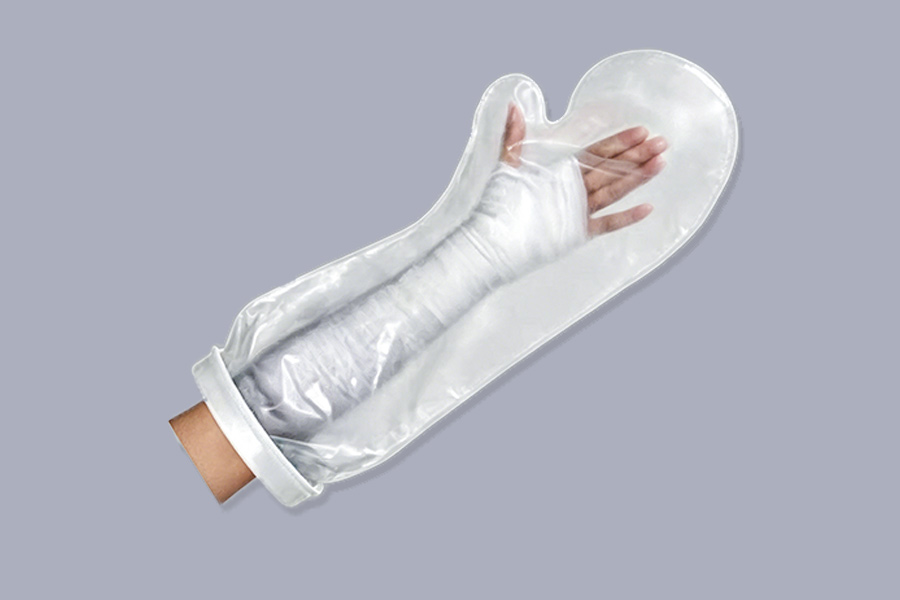
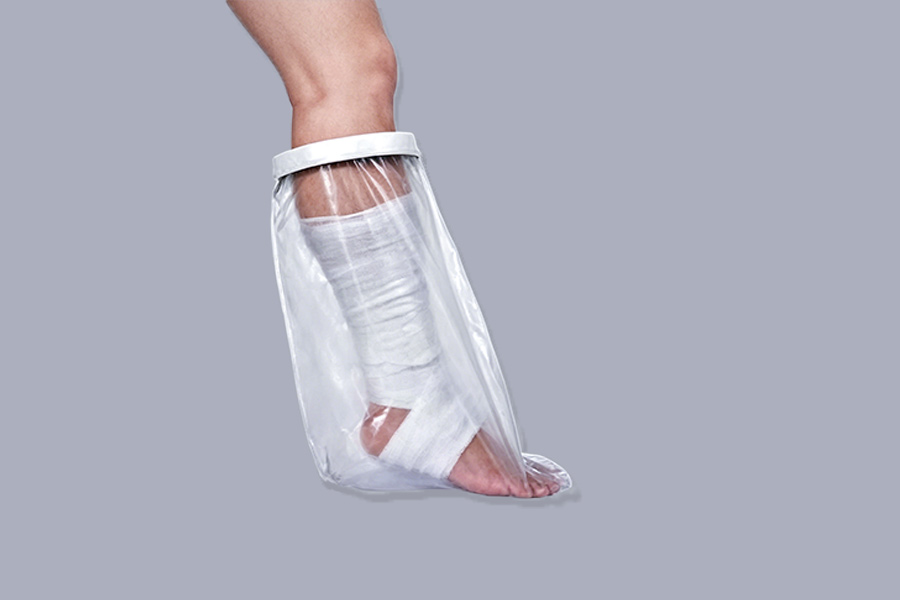
Traditional POP casts absorb moisture at every layer. If the cast gets wet, the plaster softens, structural integrity is lost, and skin complications — maceration, dermatitis, fungal infection — become likely. Patients must wrap the limb in plastic bags or specialist waterproof covers before every shower. NHS clinical guidance on cast care specifically advises patients to purchase waterproof protector sleeves and avoid direct water contact throughout the entire immobilization period. This routine — while manageable for some — is a genuine barrier for patients with limited dexterity, those living alone, or those with active daily lifestyles.
Waterproof fiberglass casts eliminate most of this friction. Patients can bathe and shower normally, provided they rinse the cast thoroughly afterward and allow adequate drying. Pool use is possible within defined time limits, though chlorinated water should be flushed out promptly to prevent skin irritation from trapped residue. The practical effect is a marked improvement in daily hygiene compliance and a reduction in skin-related complications that can delay cast removal.
One important nuance: fiberglass casts that lack a dedicated waterproof liner are only partially water-resistant. The outer shell repels water, but the cotton or synthetic padding underneath will absorb moisture if the cast is submerged. True waterproofing requires both a fiberglass shell and a hydrophilic foam liner — a specification clinicians and procurement teams should confirm when sourcing materials. To protect the limb during non-waterproof cast use, cohesive bandages used during cast application can help create a more secure underlayer before applying the waterproof sleeve.
Weight, Breathability, and Long-Term Comfort
Waterproofing aside, the physical experience of wearing each cast type differs considerably over a multi-week recovery period.
| Property | POP Bandage Cast | Waterproof Fiberglass Cast |
|---|---|---|
| Weight | Heavier (2–3× fiberglass) | Lightweight |
| Drying Time After Application | 24–48 hours | Under 1 hour |
| Breathability | Low — minimal air circulation | Moderate — mesh structure allows airflow |
| Moldability | Excellent — ideal for complex contours | Good — requires rapid application |
| Durability | Moderate — weakens with moisture | High — maintains structure under normal conditions |
| Skin Irritation Risk | Lower in dry conditions | Higher in humid regions or prolonged wear |
| Cost per Application | Low | Moderate to High |
The weight difference is clinically significant, particularly for upper limb fractures. A heavy forearm cast fatigues the shoulder and neck musculature over weeks, contributing to secondary discomfort that patients — especially elderly individuals — frequently report. Fiberglass casts substantially reduce this burden.
Breathability presents a more complex picture. Fiberglass's open-weave structure does allow more air circulation than solid POP, reducing the risk of heat accumulation. However, in high-humidity environments or tropical climates, the residual moisture that can collect under any cast liner — waterproof or otherwise — creates conditions for skin breakdown. Clinicians in such settings often prefer POP for shorter immobilization periods precisely because it remains inert once dry, without trapping humidity.
Matching Cast Type to Patient Lifestyle: A Clinical Framework
The most effective casting decision accounts for the patient's injury, yes — but also for their daily environment, their dependents, and their physical demands during recovery. A one-size approach serves neither the patient nor the clinical outcome.
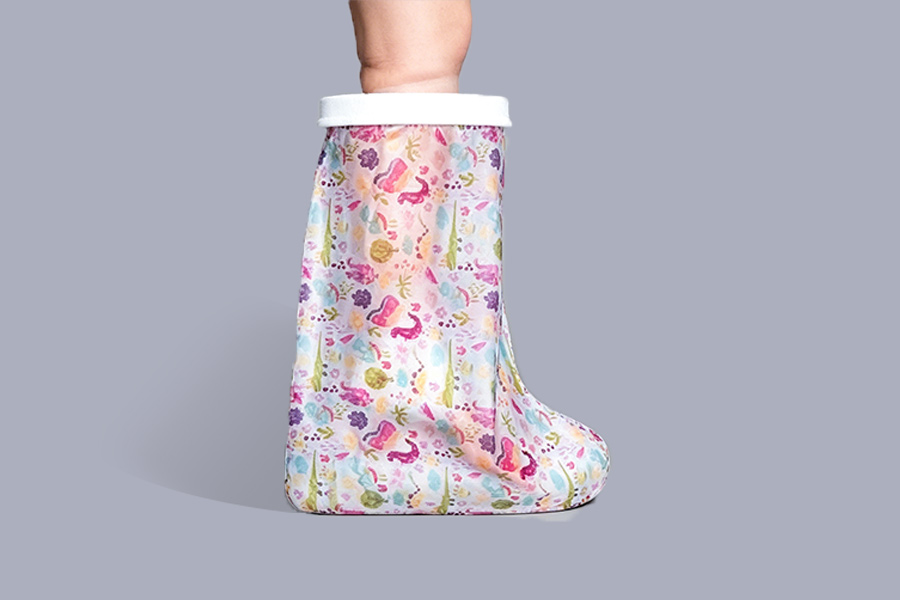
Pediatric patients are among the clearest beneficiaries of waterproof casting. Children are reliably incapable of keeping a cast dry during normal play, bathing, or outdoor activity. Pediatric cast care guidance from KidsHealth confirms that waterproof casts are specifically designed for situations where conventional cast protection is impractical — a description that fits most active children. For stable upper-limb fractures in this group, waterproof fiberglass significantly improves parent and patient compliance without sacrificing immobilization quality.
Physically active adults and athletes in recovery benefit from fiberglass's lighter weight and durability. For an athlete managing a distal radius fracture, the ability to maintain upper body conditioning, participate in modified training, or return to light occupational duties without restructuring every hygiene routine represents a meaningful quality-of-life advantage. Pairing a fiberglass cast with ankle braces as a transitional support alternative in lower-limb cases can also help bridge the gap between full cast immobilization and return to activity.
Manual laborers and construction workers present a different profile. Their daily work exposes any cast to mechanical stress, dirt, and moisture. Fiberglass's superior durability makes it the preferred choice, though the clinical team must weigh whether continued physical activity is appropriate for the fracture type.
Elderly patients with reduced grip strength or balance challenges benefit most from a lighter fiberglass cast — the reduced limb load lowers fall risk and fatigue — but the higher moldability of POP can be advantageous when fitting irregular or edematous limbs shortly after injury.
Resource-limited clinical settings — community hospitals, low-income regions, field medicine contexts — will often default to POP for good reason. Its low cost, room-temperature storage requirements, and forgiving application technique make it indispensable in global orthopedic practice. For supporting elastic bandages for post-cast compression support during transition phases, POP-based pathways remain clinically sound and cost-effective.
Cost, Availability, and Procurement Considerations
From a procurement standpoint, the cost differential between POP bandages and waterproof fiberglass casts is substantial enough to shape formulary decisions in high-volume orthopedic departments.
POP bandages remain significantly cheaper per application — often by a factor of three to five depending on the sourcing region. For departments managing hundreds of fractures monthly, this difference compounds rapidly. POP's long shelf life under standard conditions, minimal storage requirements, and universal clinician familiarity also reduce training and logistics overhead.
Waterproof fiberglass casts carry a higher unit cost but generate savings in adjacent categories: fewer cast replacements due to water damage, lower incidence of skin complications requiring additional clinical visits, and improved patient satisfaction scores that can influence departmental metrics. For institutions tracking total cost of care — not just material spend — fiberglass's value proposition strengthens considerably.
Procurement teams sourcing casting materials at scale should also consider:
- Width and length variability — both POP and fiberglass are available in multiple widths (typically 3" to 6") to accommodate different body parts and patient sizes
- Setting time specifications — faster-setting POP formulations (3–5 minutes vs. standard 5–8 minutes) improve throughput in busy emergency departments
- Packaging integrity — individually sealed rolls maintain sterility and extend shelf life, a critical factor for bulk purchasing
- Regulatory compliance — ensure materials meet applicable regional standards (CE marking in Europe, FDA clearance in the US) for both cast types
What Quality Casting Materials Mean in Practice
The clinical outcome of any cast depends only partly on the type of material chosen. The other half of the equation is material quality — and that variance is wider than many clinicians appreciate.
A POP bandage that under-delivers on calcium sulfate concentration will produce a cast that feels solid at application but fractures under normal stress within days. A fiberglass roll with uneven resin distribution creates weak spots that shift load unpredictably across the fracture site. In both cases, the consequence is a return visit, a cast change, and a delayed healing timeline.
Reliable suppliers provide consistent product specifications: uniform impregnation, controlled setting time within stated tolerances, and packaging that preserves material properties through transport and storage. For procurement managers building long-term supplier relationships, auditing production standards — not just unit pricing — is the more defensible approach to quality control.
Complementary consumables also matter. The performance of any cast is influenced by the quality of underlining gauze, padding rolls, and the bandages used to secure protective dressings during cast transitions. Sourcing these from a single, quality-verified supplier simplifies the supply chain and ensures material compatibility. For facilities that need to be prepared for orthopedic emergencies across care settings, maintaining stocked first aid kits for orthopedic emergency preparedness alongside casting materials rounds out a complete orthopedic consumables program.
The choice between waterproof fiberglass and POP bandage is ultimately a clinical judgment — not a binary one. Most orthopedic departments use both, assigning each material to the fracture types and patient profiles where it genuinely excels. What distinguishes institutions that manage this well from those that don't is rarely which material they choose. It is how consistently they source materials that perform to specification, and how systematically they match those materials to patient needs.