English
 Français
 Español
 Português
 عربى
عربى 日本語
日本語 한국어
한국어 русский
Antimicrobial Wound Dressings: Types, Benefits & Selection Guide
Content
- 1 Antimicrobial Wound Dressings: Why They Matter in Modern Wound Care
- 2 Key Types of Antimicrobial Agents and Their Clinical Roles
- 3 Selection Criteria: Matching Dressing to Wound and Patient
- 4 Integrating Antimicrobial Dressings into a Complete Wound Care System
- 5 Future Outlook: Smart Dressings and Antimicrobial Stewardship
Antimicrobial Wound Dressings: Why They Matter in Modern Wound Care
The difference between a wound that heals uneventfully and one that stalls into a chronic infection often comes down to the dressing you choose. Antimicrobial wound dressings are no longer a niche option reserved for the most severe cases; they are a frontline defense against biofilm formation and resistant bacteria in both acute and chronic wounds. For healthcare buyers, understanding the specific mechanisms, indications, and limitations of each antimicrobial agent is the first step toward reducing treatment costs and improving patient outcomes.
Unlike standard passive dressings that simply absorb exudate, antimicrobial dressings actively reduce bioburden at the wound surface. This targeted action prevents local wound infection from escalating to systemic complications, shortens healing times, and lowers the risk of surgical site infections. When you integrate these advanced dressings into a protocol-driven wound care system, you are not merely covering a wound—you are managing its microbiology.
Key Types of Antimicrobial Agents and Their Clinical Roles
Selecting an antimicrobial dressing requires more than brand preference; it demands an understanding of the active agent's spectrum, release kinetics, and compatibility with wound types. The following are the most clinically relevant categories, each with distinct advantages.
Silver-Impregnated Dressings
Silver ions disrupt bacterial cell membranes and interfere with DNA replication, providing broad‑spectrum activity against gram‑positive and gram‑negative bacteria, including MRSA and VRE. The sustained release of silver from modern nanocrystalline or ionic silver dressings maintains a bactericidal concentration for up to seven days, reducing dressing change frequency. Silver dressings are particularly effective for heavily exuding wounds, partial-thickness burns, and diabetic foot ulcers with critical colonization. However, prolonged use can delay wound closure in clean wounds, so they should be discontinued once bioburden is controlled.
PHMB Dressings (Polyhexamethylene Biguanide)
PHMB is a synthetic polymer that binds to the bacterial cell wall and disrupts membrane integrity without being cytotoxic to human cells at therapeutic concentrations. Its primary advantage is its high tissue compatibility and minimal risk of resistance, making it a first-line choice for burns, split-skin graft donor sites, and chronic wounds with sensitive periwound skin. Unlike silver, PHMB retains antimicrobial efficacy in the presence of organic matter such as blood and exudate, which makes it reliable in highly contaminated wound beds.
Iodine-Based Dressings
Cadexomer iodine and povidone‑iodine formulations deliver free iodine that rapidly penetrates the bacterial cell wall. These dressings are bactericidal, virucidal, and fungicidal, with excellent anti‑biofilm properties. Cadexomer iodine, in particular, moderates the release of iodine and simultaneously absorbs wound debris, making it suitable for sloughy, infected pressure ulcers. The main limitation is possible thyroid interference with prolonged use on large surface areas, so patient monitoring is essential.
Medical-Grade Honey Dressings
Leptospermum honey-based dressings work through multiple mechanisms: low pH, osmotic effect, and enzymatic production of hydrogen peroxide. They provide a moist healing environment, reduce malodor, and are naturally debriding. Honey dressings are often preferred for malodorous, necrotic wounds and for patients with sensitivities to synthetic antimicrobials. Their efficacy, however, diminishes under heavy exudate unless combined with a highly absorbent secondary dressing.
Quaternary Ammonium Compounds (QACs)
QAC‑impregnated dressings, such as those based on benzalkonium chloride, offer a cost‑effective, detergent‑like mechanism that disrupts microbial cell membranes. They are commonly used in post‑surgical incision dressings and for low‑exuding wounds where heavy exudate is not a concern. While effective against a wide range of pathogens, their adherence to wound surfaces can be lower, so securing them properly with a fixation method is critical.
Selection Criteria: Matching Dressing to Wound and Patient
No single antimicrobial dressing fits all scenarios. A structured assessment that evaluates wound characteristics, patient factors, and logistical considerations will yield the best procurement decisions.
- Exudate level: Highly exuding wounds require foams or alginates with integrated antimicrobials, while dry wounds are better served by hydrogels with silver or honey.
- Wound phase: Inflammatory, sloughy wounds benefit from cadexomer iodine or honey; granulating wounds need low‑cytotoxicity options like PHMB.
- Infection status: Clinically infected wounds with thick biofilm may necessitate a strong, fast‑acting agent such as silver, while critically colonized wounds can be managed with PHMB or honey.
- Patient sensitivity: Known allergies to silver, iodine, or bee products must be screened; PHMB is often the safest alternative.
- Cost and wear time: Evaluate not only unit price but also the number of dressing changes; a longer‑wear silver dressing may reduce nursing time and overall cost per episode of care.
Procurement teams should also consider ease of application, availability of secondary fixation products, and compatibility with compression therapy for venous leg ulcers.
Integrating Antimicrobial Dressings into a Complete Wound Care System
An antimicrobial primary dressing alone cannot ensure optimal healing without the right support layers. The dressing must be fixed securely, exudate must be managed without strikethrough, and the periwound skin must be protected. This is where secondary dressings and fixation materials become indispensable components of the treatment protocol.
For wounds with moderate to heavy exudate, a secondary absorbent cover such as highly absorbent non-woven wound dressings with secure adhesive borders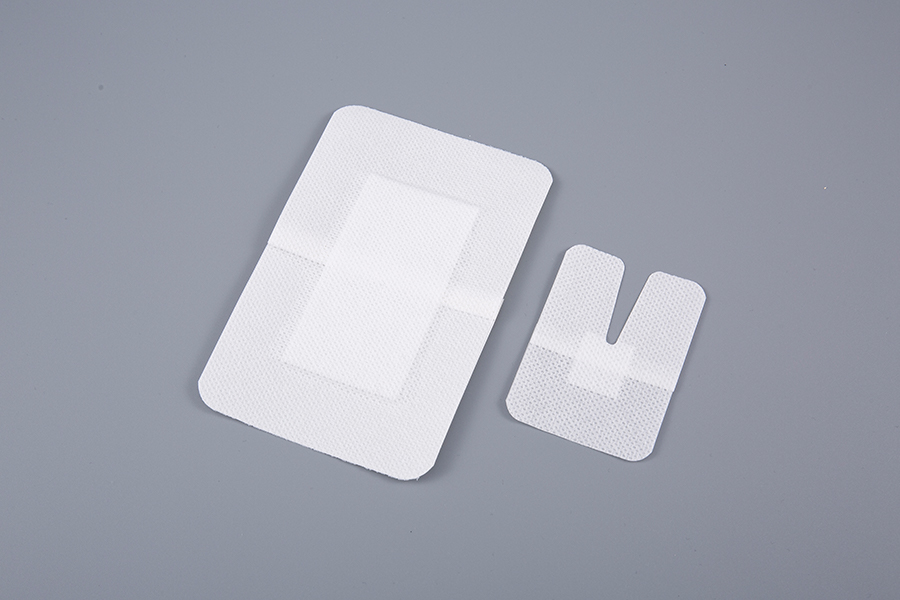 Custom Adhesive Non Woven Wound Dressing Suppliers, Company - SUZHOU TEXNET CO.,SUZHOU TEXNET CO., LTD. - China Adhesive Non Woven Wound Dressing Suppliers and Company, Custom Adhesive Non Woven Wound Dressing for sal...View Product → provides a clean, low‑lint barrier that wicks fluid away from the primary antimicrobial layer without disrupting its active agents. These non‑woven dressings reduce the risk of maceration and keep the wound environment stable between dressing changes.
Equally important is the method of fixation. Even the most advanced antimicrobial dressing will fail if it migrates or loses skin contact. Refer to our complete guide to medical tapes for secure fixation to select the right tape for fragile skin, high‑movement areas, or specific anatomical sites. For bulkier wounds or under compression, you can complement your dressing choice with a range of supportive gauze bandages that hold the primary and secondary layers in place without compromising circulation.
Future Outlook: Smart Dressings and Antimicrobial Stewardship
The next generation of antimicrobial dressings will be smarter—integrating pH-sensing indicators, temperature monitors, and controlled drug release. These innovations aim to detect early infection before clinical signs appear, reducing the unnecessary prophylactic use of antimicrobials and supporting stewardship programs. The focus is shifting toward bioresponsive materials that release antimicrobial agents only when triggered by bacterial enzymes or toxins.
For healthcare systems and procurement specialists, this means investing in dressings that not only fight infection today but also align with long‑term strategies to combat antimicrobial resistance. The most cost‑effective choice will increasingly be the one that delivers timely, localized treatment without contributing to the global burden of resistance.