English
 Français
 Español
 Português
 عربى
عربى 日本語
日本語 한국어
한국어 русский
First Aid Kit for Alpine Skiing: Practical Packing & Bandage Guide
Content
- 1 Why a first aid kit for alpine skiing needs to be purpose-built
- 2 Wound care essentials for edges, poles, and abrasion injuries
- 3 Compression and support: sprains, strains, and suspected fractures
- 4 Cold-risk module: hypothermia, frostbite, and wet clothing problems
- 5 Right-sizing the kit: resort day packs vs backcountry touring
- 6 Procurement criteria: what buyers should demand from bandage and dressing suppliers
- 7 A simple on-snow response workflow (and when to escalate immediately)
Why a first aid kit for alpine skiing needs to be purpose-built
A first aid kit for alpine skiing should be designed around two realities: injuries frequently involve joints and fractures from high-energy falls, and the cold environment can worsen outcomes if care is delayed. Even in resort settings, terrain, weather, and lift access can slow down movement to definitive care—especially if an incident happens late in the day or away from patrol routes.
Published epidemiology consistently shows that knee ligament injuries are a leading issue in alpine skiing, and lacerations and fractures are also common in real-world incidents. Your kit should therefore prioritize: bleeding control, wound protection, compression/support, and heat conservation.
- For organizations (ski schools, tour operators, rental shops), a kit is also a brand-risk control: consistent supplies and clear layout reduce handling time and error rate during stressful moments.
- For retailers and distributors, alpine-skiing kits sell best when they are scenario-based (wounds, sprains, cold exposure) rather than “generic outdoors.”
Wound care essentials for edges, poles, and abrasion injuries
Alpine skiing creates a specific wound profile: sharp equipment edges, hard-packed snow, and icy surfaces can cause cuts and abrasions that need fast coverage to reduce contamination and heat loss. The most practical approach is to standardize a “clean–cover–secure” workflow with supplies that stay reliable in cold, dry air.
Recommended wound module (compact, high-utility)
- Barrier protection: nitrile gloves (2–4 pairs), alcohol-free wipes, small waste bag.
- Dressings: sterile gauze pads, non-adherent pads, and an absorbent pad for heavier bleeding.
- Fixation: medical tape plus a light wrap to lock the dressing in place over gloves, base layers, and movement.
- Blister control: hydrocolloid blister dressings or moleskin plus tape (blisters are common when boot fit is imperfect or socks are damp).
From a manufacturing perspective, the most overlooked selection criterion is material performance during long wear. In alpine conditions, dressings must balance absorption with breathability. If you are sourcing for resale or institutional use, prioritize breathable wound care bandages that help maintain a cleaner healing environment while minimizing moisture buildup under layers.
| Scenario | Minimum supplies | Field note |
|---|---|---|
| Ski-edge laceration | Sterile gauze + pressure wrap + tape | Use firm direct pressure; secure so it won’t slide under clothing |
| Abrasions (“road rash” on ice) | Non-adherent pad + fixation wrap | Non-adherent layers reduce pain during dressing changes |
| Hot spot / early blister | Blister dressing or moleskin + tape | Treat early; once open, add a protective cover to reduce contamination |
Compression and support: sprains, strains, and suspected fractures
In alpine skiing, joint trauma is a core design driver for any kit. Knee ligament injuries are widely reported as among the most common ski injuries, and fracture patterns vary by age, ability level, and snow conditions. Practically, your kit should assume that a participant may need stabilized movement to a warmer location or to professional care.
What to pack for support and immobilization
- Elastic wrap bandage: for compression and support on ankles, wrists, and over dressings. For consistent application, standard wrapping guidance uses about 50% overlap as you work up the limb.
- Triangular bandage: versatile for slings and tie-offs.
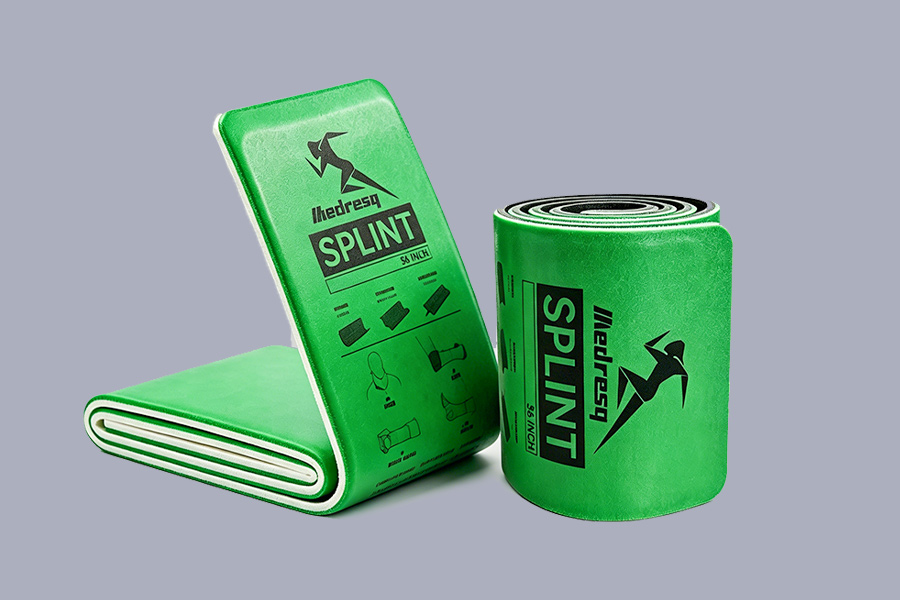
- Compact splint: a moldable splint plus tape can stabilize many limb injuries for evacuation.
- Secondary fixation: cohesive wrap or tape to keep supports from loosening over base layers.
If you are sourcing components for retail kits or program-issued packs, choose elastic bandage wraps that are consistent roll-to-roll (tension, width, edge quality). Consistency matters because users tend to over-tighten when stressed; predictable stretch helps reduce that risk.
For quick retention over joints or for securing dressings without adhesive on skin, a tubular bandage can be a practical add-on: it slides on rapidly, conforms to contours, and is well suited for fingers, wrists, and ankles where tape frequently fails under movement and moisture.
Cold-risk module: hypothermia, frostbite, and wet clothing problems
Cold exposure is the “silent multiplier” in ski incidents. Someone who is stationary after a fall cools quickly, and wet gloves/socks accelerate heat loss. Your first aid kit for alpine skiing should include a dedicated cold-risk module that can be deployed in under one minute.
The minimum cold-risk module
- Emergency insulating layer: compact emergency blanket or bivy to block wind and retain heat.
- Dry layer: spare gloves or liner gloves, plus a spare hat/neck gaiter for the patient.
- Gentle rewarming tools: chemical heat packs (used carefully and not directly on bare skin).
- Quick checklist card: simple steps for sheltering from wind, removing wet layers, and warming gradually.
Operational rule for organizations: treat hypothermia as a time-sensitive escalation. A commonly cited medical threshold is below 95°F (35°C), which should trigger urgent medical evaluation. Your kit should therefore make “warmth-first actions” easy: shelter from wind, remove wet clothing when feasible, insulate from the ground, and rewarm slowly.
Right-sizing the kit: resort day packs vs backcountry touring
There is no single universal configuration. From a supplier standpoint, the most successful kit programs use two tiers: a compact kit for lift-access resort skiing and an expanded kit for backcountry or sidecountry travel. The dividing line is straightforward: the farther you are from rapid help, the more you should carry—especially for immobilization and heat retention.
| Kit tier | Primary focus | Add-ons that matter most |
|---|---|---|
| Resort / day kit | Wounds, blisters, light support | Compact blanket, spare gloves, elastic wrap |
| Backcountry / guide kit | Stabilization + extended warmth | Moldable splint, extra dressings, larger insulation, documentation card |
Packaging and layout tips (important for retail and programs)
- Use cold-friendly packaging: resealable pouches that can be opened with gloves and won’t crack in low temperatures.
- Split into modules (wound / support / cold): this reduces search time and simplifies restocking.
- Include a minimal training prompt: many organizations encourage higher training (for example, Wilderness First Responder-level education) for staff operating in remote terrain.
Procurement criteria: what buyers should demand from bandage and dressing suppliers
If you are building first aid kits for alpine skiing at scale—whether for resale, rental operations, ski patrol support caches, or training programs—supplier selection matters as much as the contents list. The same item category can perform very differently depending on materials, process control, and packaging.
Non-negotiables for consistent kit performance
- Quality system signals: look for manufacturers operating under recognized medical quality frameworks (commonly including CE marking pathways and ISO 13485-aligned manufacturing controls where applicable).
- Material logic: breathable, skin-friendly substrates and reliable elasticity for wraps; avoid products that shed lint into wounds or lose stretch after storage.
- Packaging discipline: clear labeling, lot traceability, and (when required) sterilized, individually packed formats to simplify field use and auditing.
- OEM/ODM readiness: if you sell kits under your own brand, ensure the supplier can support consistent dimensions, multilingual IFUs, and stable lead times.
As an example of what buyers often request for alpine applications: breathable bandage materials for comfort under layers, elastic options for sprain support, and product lines that support one-stop procurement across wound care and support categories. A supplier that can consolidate these categories reduces fragmentation and improves consistency across kit versions.
A simple on-snow response workflow (and when to escalate immediately)
A well-designed first aid kit for alpine skiing is only effective if it supports a fast, repeatable workflow. For organizations, this is also where training and standard operating procedures add the most value.
- Secure the scene and protect the patient from wind and cold (add insulation early).
- Control bleeding and cover wounds (clean when feasible, then dress and secure).
- Stabilize painful joints or suspected fractures (splint/support before moving).
- Monitor for cold stress and altered mental status; keep the person warm and dry.
- Escalate to professional care when symptoms are severe, worsening, or involve head injury concerns.
Key operational takeaway: design the kit so the first 60 seconds are obvious. The top layer should enable immediate warmth, gloves, and bleeding control—because those are the actions most likely to change outcomes before transport.