English
 Français
 Español
 Português
 عربى
 日本語
 한국어
 русский

Skin Staplers: An Important Tool in Modern Surgical Wound Closure
Content
- 1 1. Product Overview: Types, Components and Clinical Applications
- 2 2. Product Requirements: What Should Buyers Evaluate Before Purchasing?
- 3 3. Product Performance: Evaluating Functionality, Reliability and Ease of Use
- 4 4. Supplier Selection: How to Choose a Reliable Skin Stapler Manufacturer
- 5 Conclusion: A Structured Approach to Skin Stapler Procurement
As surgical facilities continue to focus on procedural efficiency, wound management, and consistent patient care, skin staplers remain an important option for external wound closure. Hospitals, ambulatory surgery centers, and outpatient surgical facilities use these devices in selected procedures where mechanical skin closure is appropriate.
Compared with traditional suturing, skin staplers offer a different approach to wound closure by allowing clinicians to apply surgical staples through a handheld deployment mechanism. Their practical value depends on several factors, including incision characteristics, device design, staple specifications, and clinician familiarity.
For healthcare procurement teams and medical distributors, selecting skin staplers involves more than comparing unit prices. Product configuration, staple formation, device reliability, sterility, packaging, and supplier performance all influence purchasing decisions.
The market includes several designs, including standard skin staplers, rotating-head skin staplers, and compatible staple removers. Each serves a different purpose within the wound closure and follow-up care process.
Understanding these differences helps surgical teams identify suitable products while allowing procurement professionals to build a more effective and cost-conscious supply program.
1. Product Overview: Types, Components and Clinical Applications
Skin staplers are medical devices designed to approximate external skin wound edges using surgical staples. They are commonly used in selected surgical procedures as an alternative to conventional suturing.
A typical skin stapler consists of a handheld housing, an operating handle or trigger, and a staple cartridge containing compatible surgical staples. When activated, the mechanism deploys and forms a staple to approximate the wound edges.
Depending on the model, the device may feature a fixed or adjustable staple head, different staple configurations, and varying cartridge capacities.
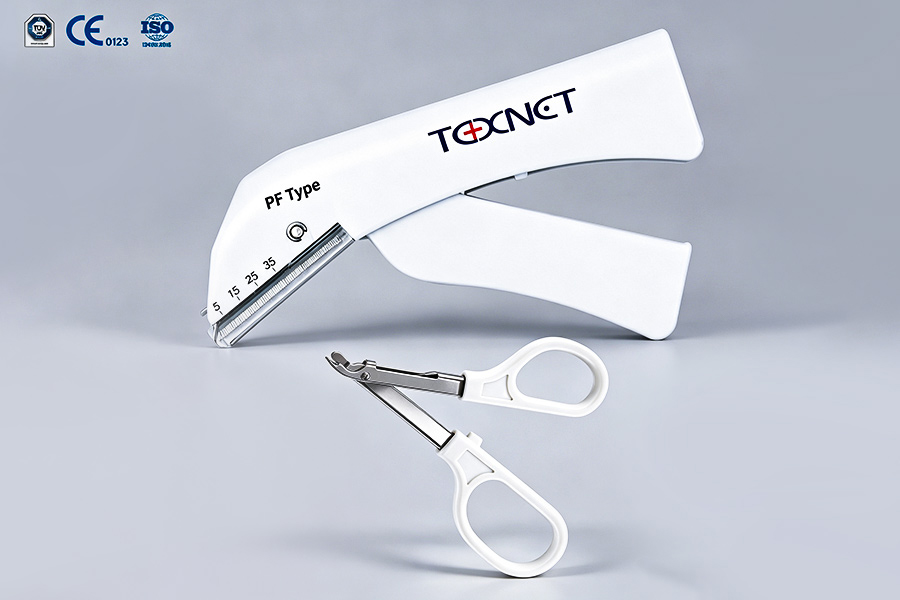
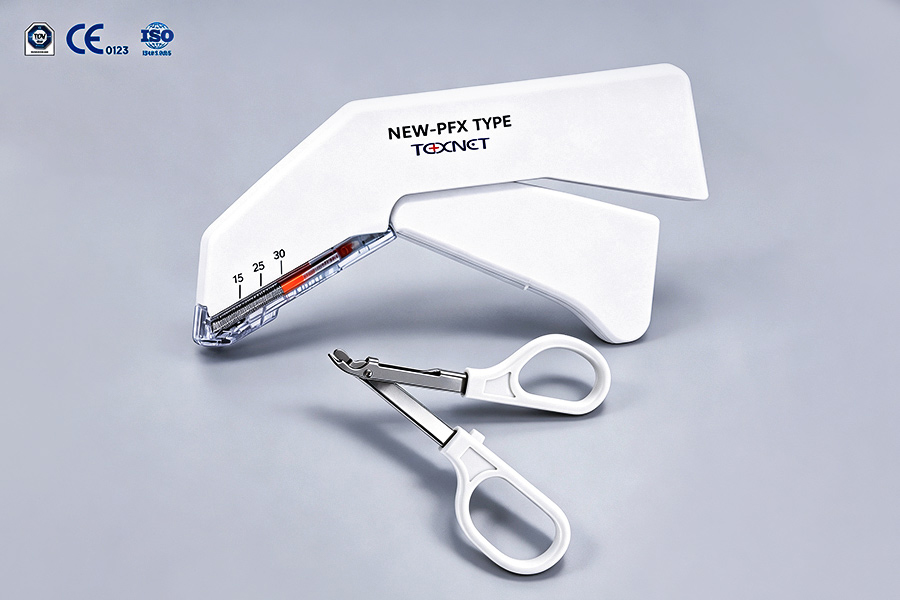
Based on the products shown, the main categories include standard PFX-type skin staplers, rotating-head skin staplers, and skin staple removers.
Standard Skin Staplers
Standard skin staplers are designed for routine external wound closure. Their relatively straightforward structure makes them suitable for surgical teams that prefer a conventional fixed-head design.
The PFX-type skin stapler series shown in the product reference offers multiple specifications intended to accommodate different incision lengths and procedural requirements.
The product description highlights medical-grade materials and precision staple forming as important design features. A compatible skin staple remover is also available to support subsequent staple removal.
For healthcare facilities, offering different specifications can help match device selection to the types of procedures performed.
Rotating-Head Skin Staplers
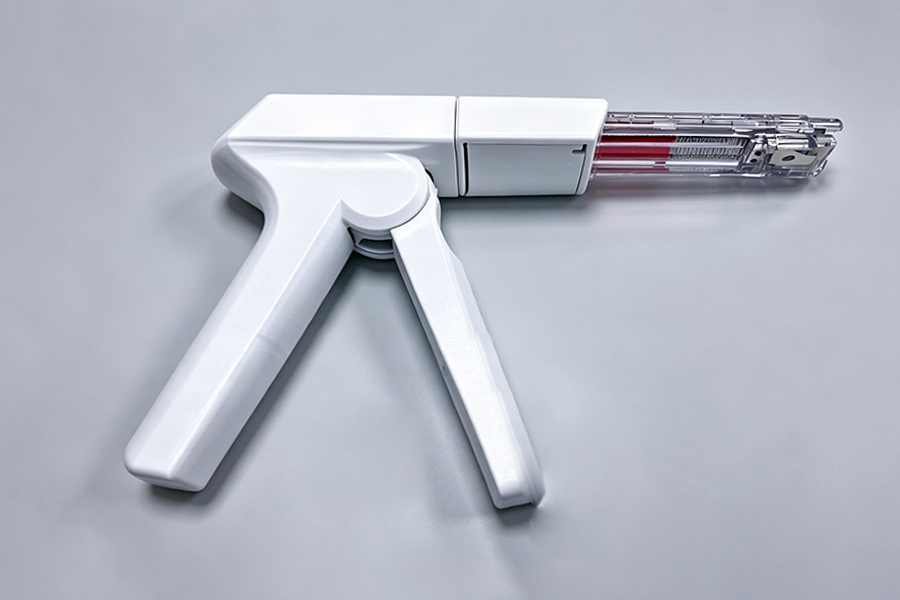
Rotating-head skin staplers feature an adjustable head that can rotate through 360 degrees. This design allows clinicians to change the staple head orientation when approaching incisions at different angles.
The rotating-head model shown in the product reference includes several identifiable features:
- 360-degree rotatable staple head.
- Ergonomic pistol-grip handle.
- EO sterilization.
- Single-use design.
- Overall length: 16.5 cm.
- Handle length: 8.5 cm.
- Staple cartridge length: 6.5 cm.
- Staple head width: 1.5 cm.
The adjustable head is intended to provide additional positioning flexibility, while the pistol-grip handle supports controlled operation.
For surgical teams, the main consideration is whether the rotating design offers a practical advantage for their particular procedures and working positions.
Skin Staple Removers
Staple removers are designed to remove previously applied skin staples during appropriate follow-up care.
They are an important complementary product because surgical wound closure does not end when the incision is stapled. Patients may require follow-up assessment and staple removal according to the clinician's evaluation and treatment plan.
For procurement departments, purchasing compatible staplers and removers together can simplify supply planning and reduce the risk of selecting incompatible products.
Common Clinical Applications
Skin staplers may be considered for selected procedures in:
- General surgery.
- Orthopedic surgery.
- Post-operative incision closure.
- Other surgical settings requiring external skin approximation.
The choice between stapling and suturing depends on the wound, anatomical location, tissue characteristics, clinical judgment, and applicable procedural protocols.
Skin staplers are not appropriate for every wound. Clinicians must evaluate the intended application and follow the manufacturer's instructions for use.
2. Product Requirements: What Should Buyers Evaluate Before Purchasing?
After identifying the appropriate product type, procurement teams should review its technical specifications, material requirements, sterility, and packaging.
For U.S. healthcare buyers, these factors are essential when comparing products from different manufacturers or establishing long-term purchasing agreements.
Device Design and Staple Specifications
The stapler should be evaluated according to its intended use and compatible staple configuration.
Important specifications include:
- Staple dimensions and forming characteristics.
- Staple cartridge capacity.
- Fixed-head or rotating-head design.
- Device dimensions and handling configuration.
- Compatible staple remover specifications.
- Single-use or reusable designation.
Buyers should confirm that the staple cartridge is compatible with the device and that product specifications are clearly documented.
Different models should not be assumed interchangeable simply because they share a similar appearance.
Material Quality and Manufacturing Requirements
The device housing, operating mechanism, and staple components should be manufactured using materials appropriate for their intended medical application.
Procurement teams should review material specifications, structural integrity, assembly consistency, and manufacturing quality controls.
For staple components, consistent forming characteristics are particularly important. Buyers should request technical documentation and evaluate representative samples before approving bulk orders.
Sterility and Packaging Requirements
Sterility is a critical consideration for surgical devices.
The rotating-head model shown is identified as EO-sterilized and intended for single use. Buyers should verify these claims through the product labeling and applicable manufacturer documentation.
For sterile products, procurement teams should request information covering:
- Ethylene oxide sterilization method.
- Sterilization validation documentation.
- Sterile barrier packaging.
- Shelf life and expiration labeling.
- Storage and transportation conditions.
- Single-use instructions.
Packaging should protect the product throughout transportation and storage. Damaged or compromised sterile packaging should be handled according to the manufacturer's instructions and facility protocols.
Regulatory Compliance and Documentation
For products marketed in the United States, buyers should verify applicable FDA requirements based on the device's classification, intended use, and product configuration.
External-use surgical skin staplers and internal surgical staplers should not be treated as the same regulatory category.
Procurement teams should request relevant manufacturer information, device identification, applicable FDA regulatory documentation, quality records, and instructions for use.
It is also important to distinguish between FDA establishment registration, device listing, clearance, and approval. These terms describe different regulatory concepts and should not be used interchangeably in product marketing or purchasing documentation.
For distributors, maintaining accurate product documentation helps support customer qualification and ongoing supply management.
3. Product Performance: Evaluating Functionality, Reliability and Ease of Use
Once the product requirements have been established, buyers should assess how the device performs under its intended conditions of use.
A skin stapler's performance is influenced by staple formation, deployment consistency, handle design, and overall device functionality.
Staple Formation and Deployment Consistency
Staple formation is one of the most important performance considerations.
The device should consistently deploy and form compatible staples according to the manufacturer's specifications. Incomplete deployment, inconsistent staple formation, or mechanical resistance may affect the closure process and require further investigation.
Buyers should evaluate representative samples and review the manufacturer's applicable performance and quality documentation.
Handle Design and Operating Comfort
The handle influences how clinicians position and operate the stapler.
An ergonomic pistol-grip configuration can provide a familiar hand position and support controlled trigger operation.
When evaluating samples, surgical staff should consider grip comfort, trigger response, device balance, and ease of handling.
These factors are particularly relevant for facilities where clinicians use skin staplers regularly.
Rotating-Head Flexibility
The 360-degree rotating-head design provides an additional positioning option compared with conventional fixed-head staplers.
Its practical value depends on the incision location, operating angle, and preferences of the surgical team.
Buyers should evaluate whether the head rotates smoothly, maintains its intended position, and supports convenient access during representative handling assessments.
A rotating head should be considered a design feature rather than an automatic indication of superior clinical performance.
Staple Remover Functionality
Staple removers should provide appropriate engagement with the compatible staple during removal.
Important evaluation points include instrument alignment, ease of handling, mechanical consistency, and compatibility with the selected staple configuration.
For facilities purchasing both products, evaluating the stapler and remover as a compatible product system can help prevent unnecessary procurement issues.
Overall Product Consistency
Beyond individual features, consistency across production batches is essential.
Procurement teams should compare samples from different production lots where appropriate and review whether materials, dimensions, packaging, and operating characteristics remain consistent.
Reliable product performance supports standardized clinical workflows and reduces the likelihood of supply-related disruptions.
4. Supplier Selection: How to Choose a Reliable Skin Stapler Manufacturer
Selecting a suitable supplier is the final and equally important stage of the procurement process.
For hospitals, surgical facilities, and medical distributors, a supplier must provide more than competitive pricing. Manufacturing consistency, regulatory documentation, production capacity, and communication all contribute to long-term purchasing value.
Manufacturing Capabilities and Quality Management
Buyers should evaluate how manufacturers manage raw materials, device assembly, staple production, sterilization, packaging, and final inspection.
A reliable manufacturer should have documented quality management procedures and established controls for maintaining product specifications.
Ask suppliers how they handle nonconforming products, production changes, and quality complaints.
Regulatory and Product Documentation
Suppliers should be able to provide appropriate product specifications, instructions for use, labeling information, and applicable regulatory documentation.
For sterile devices, sterilization and packaging records should also be available for review.
Distributors should confirm that the documentation corresponds to the exact model and configuration being purchased.
Sample Evaluation and Product Verification
Requesting samples before placing a large order is a practical way to evaluate product suitability.
Samples should be checked for:
- Device dimensions and staple specifications.
- Housing and handle construction.
- Trigger operation and handling.
- Rotating-head adjustment, where applicable.
- Staple deployment consistency.
- Packaging and labeling.
- Sterility status and documentation.
The approved sample should serve as a reference for subsequent bulk orders. Any changes to materials, specifications, or packaging should be communicated and reviewed before implementation.
Production Capacity and Delivery Reliability
For medical distributors and institutional buyers, consistent product availability is essential.
Before establishing a purchasing agreement, confirm the supplier's:
- Minimum order quantities.
- Standard production lead times.
- Monthly production capacity.
- Packaging and customization capabilities.
- Shipping arrangements.
- Procedures for managing unexpected delays.
A manufacturer with stable production planning and transparent communication can help buyers manage inventory more effectively.
Pricing and Total Procurement Costs
Unit price is an important factor, but it should not be the only basis for supplier selection.
A comprehensive cost assessment should include product pricing, sterilization, packaging, shipping, minimum order quantities, and inventory requirements.
Buyers should also consider the potential costs associated with inconsistent quality, replacement orders, delayed deliveries, and product changes.
A supplier offering consistent specifications and dependable delivery may provide better long-term value than a lower-priced alternative with uncertain production or quality performance.
Private Label and Customization Support
For distributors developing their own medical supply product lines, private-label capabilities may also influence supplier selection.
Potential requirements include customized packaging, product labeling, carton quantities, and model-specific configurations.
Before mass production, buyers should approve the final artwork, product specifications, and labeling details. Any customization must remain consistent with applicable regulatory and product requirements.
Conclusion: A Structured Approach to Skin Stapler Procurement
Skin staplers are an important option for external surgical wound closure, but selecting the right product requires a clear understanding of device design, clinical requirements, and purchasing specifications.
For U.S. hospitals, ambulatory surgery centers, and medical distributors, the procurement process should begin with identifying the appropriate product type, whether a standard skin stapler, a rotating-head model, or a compatible staple remover.
Buyers should then verify material quality, staple specifications, sterility, packaging, and regulatory documentation before evaluating actual device performance.
Finally, supplier selection should focus on manufacturing consistency, product traceability, sample verification, production capacity, and total procurement costs.
A structured purchasing approach helps healthcare organizations make informed decisions, maintain consistent surgical supplies, and establish more dependable supplier relationships.
As surgical facilities continue to prioritize efficient workflows and reliable wound closure products, careful skin stapler selection will remain an important part of surgical supply management.