English
 Français
 Español
 Português
 عربى
 日本語
 한국어
 русский

Foam Dressings for Pressure Sores: A Practical Selection and Sourcing Guide
Content
Pressure sores — decubitus ulcers, if you prefer the clinical term — rarely look the same from one patient to the next. A shallow ulcer over a heel asks for something quite different from a deep cavity on the sacrum. Foam dressings earn their place in that conversation because they handle the middle ground well: they take up moderate to heavy exudate, keep the wound bed moist, and cushion skin that has already been through enough. What follows is the practical version of what we usually share with wound care teams and distributors when they ask how to match a foam dressing to a pressure sore.
Why Foam Dressings Suit Pressure Sores
Polyurethane foam is an open-cell structure, and that structure is the whole trick. Fluid is drawn into the cells and held there, water vapour escapes through the backing film, and the wound bed stays moist — which is exactly the environment granulation tissue and new epithelium need. It is not a new idea, but it remains a reliable one.
A few practical advantages come up again and again in day-to-day use. Foam has thickness, so it offers light cushioning over bony prominences, though it never replaces proper pressure redistribution. The silicone contact layers now common on modern foam products have largely solved the old complaint of dressings that stick to fragile skin and tear it on removal. And foam sits comfortably between the two extremes: a transparent film that cannot cope with drainage, and an alginate that may be more absorbent than a lightly weeping ulcer actually needs.
It helps to say plainly when foam is the wrong tool. A dry, crusted wound has nothing for the foam to absorb, and a deep cavity will not be managed by a flat sheet laid over the top unless something fills the space underneath.
How Staging Guides the Dressing Decision
Staging is a starting point rather than an answer. It tells you roughly what kind of wound you are dealing with, which is far better than guessing. The table below is the rough map we use in conversation with clinical buyers.
| Stage | Typical appearance | Where foam fits |
|---|---|---|
| Stage 1 | Intact skin, non-blanchable redness | Usually no dressing needed; focus on offloading, perhaps a thin protective film |
| Stage 2 | Partial-thickness loss, dermis exposed | Thin foam dressing for low to moderate exudate |
| Stage 3 | Full-thickness loss, subcutaneous fat visible | Foam as the outer layer; deeper tracts may need a cavity filler |
| Stage 4 | Full-thickness loss with muscle, bone or tendon exposed | Filler plus cover; often needs debridement and specialist review |
| Unstageable / deep tissue injury | Slough or eschar obscuring the base, or intact skin with persistent discolouration | Debride first; foam rarely applies before that step |
Stage 2 sores are where foam most often shines, and where a well-chosen product genuinely earns its cost. Stage 4 wounds covered with a single flat foam sheet and no filling tend to do poorly, because the dressing seals infection into a space it cannot drain.
Choosing Between Thickness, Contact Layer and Adhesion
Exudate volume sets the grade and the wear time
Light exudate calls for a thin foam, moderate exudate for a standard one, and heavy exudate for a high-absorbency product, sometimes with an additional absorbent secondary layer. Buying thin foam to save money on a heavily weeping wound is a false economy: it strikes through sooner, gets changed more often, and costs more across a month of care.
The contact layer decides how removal feels
A silicone contact layer lifts away with less pain and less disturbance to new tissue, which matters for thin elderly skin and for wounds that need frequent inspection. Foam without a silicone layer usually relies on an acrylic adhesive at the border — stronger fixation, but more pull on the skin at removal.
Shape and border design
Bordered foams stay put without extra tape and are quicker for busy nursing rounds. Unbordered foams need secondary fixation but conform more easily to awkward anatomy. Pre-cut sacral and heel shapes reduce wrinkling, and wrinkles are where leakage starts. Most foams can be trimmed to fit, provided the cut stays outside the absorbent pad so loose fibres do not enter the wound.
Applying the Dressing and Judging Wear Time
The technique is simple, and small habits make a real difference to how long the dressing lasts.
- Clean the wound with saline or the protocol your facility uses, without scrubbing the wound bed.
- Pat the surrounding skin dry gently; friction on thin skin causes more damage than it prevents.
- Apply a skin protectant to the periwound area and let it dry fully before the dressing goes on.
- Place the foam from the centre outward, smoothing wrinkles as you go, and avoid stretching it taut over a bony prominence.
- Press the edges for about thirty seconds so the adhesive can bond properly.
Wear time follows the drainage. A heavily exuding sore may need daily changes at first; as exudate settles, three to seven days is realistic. Change the dressing whenever strike-through reaches the edge or the seal breaks, because a breached border lets bacteria in and lets the dressing lift.
When Foam Is Not the Right Answer
- A dry or eschar-covered wound: there is no exudate to manage, and foam can dry the surface further.
- Signs of spreading infection: foam alone will not address the bacterial load, and an antimicrobial approach is needed.
- Deep, narrow cavities: a flat sheet bridges the opening and leaves a dead space beneath it.
- Very fragile periwound skin: strong acrylic borders may cause more trauma than the wound itself.
None of this makes foam a poor product. It simply means the dressing has to match the wound rather than the other way around.
Sourcing Foam Dressings in Volume
For distributors and hospital procurement teams, the questions shift from clinical to practical. Sterility method and shelf life matter as much as absorption figures, and dimensions should reflect the shapes your customers actually order: 10 × 10 cm squares, 15 × 15 cm, sacral shapes and heel shapes each carry different demand. Packaging format affects storage space and waste handling, and a consistent adhesive system across a range keeps nurses from having to relearn removal technique on every ward. Our hospital supply range is organised along those lines, so a single enquiry can cover foams, tapes and secondary fixation together.
It is also worth reading up on contact layer behaviour before locking in a specification — our guide to silicone foam dressings for hospitals covers the trade-offs in more depth. Buyers assembling a complete wound care line often pair the foam itself with a dressing change set, since the two are used in the same visit.
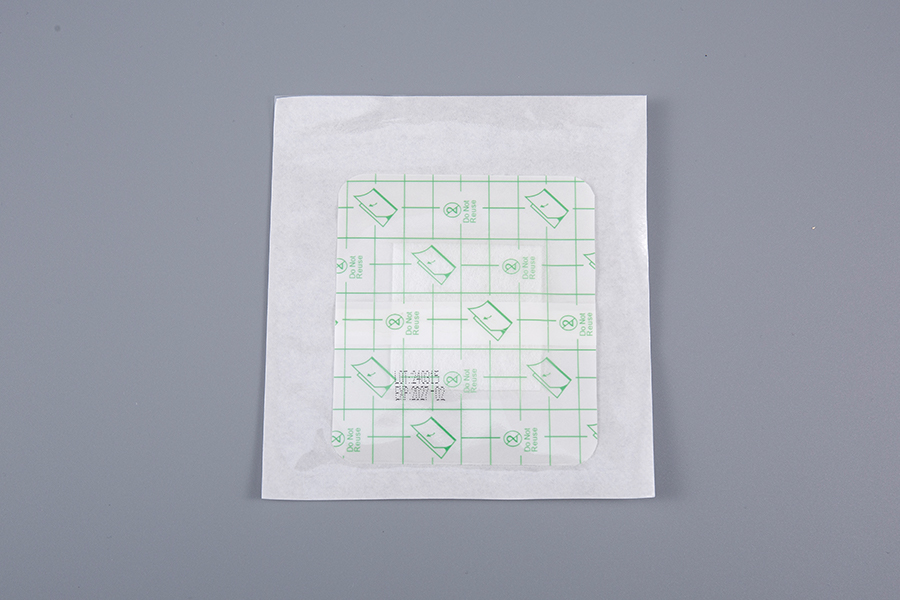 Transparent Waterproof PU Wound DressingTransparent waterproof PU dressing in multiple sizes, suitable for small wounds and transfusion; OEM or Texnet branding is available.View Product →
A PU foam dressing covers the standard square sizes and handles moderate to heavy exudate, which makes it a sensible core item for most catalogues.
 Single-Use Sterile Basic Dressing SetSterile, single-use set with gauze balls, swabs, absorbent pad and forceps; cost-effective and convenient for wound cleaning and dressing.View Product →
If your customers prefer to order in procedure form rather than piece by piece, a basic dressing set bundles the consumables used in a single change.
None of this is complicated, but the details are where outcomes and margins both live. If you are mapping out a foam range for an upcoming tender or a new private label line, we would rather ask a few questions about your market first — sizes, sterility preferences, packaging format — than send a price list and hope it fits.