English
 Français
 Español
 Português
 عربى
عربى 日本語
日本語 한국어
한국어 русский
How Silicone Sheets Help Scars Heal: Mechanism, Evidence, and Best Practices
Content
What silicone sheets actually do to scar tissue
A scar starts forming the moment a surgical incision or deep wound closes. Many people notice a red, slightly raised line and begin looking for something that will keep it flat and less visible. The answer that dermatologists and surgeons most often recommend is silicone in sheet or gel form. Silicone sheets help scars by restoring a normal moisture balance across the damaged area, reducing mechanical tension, and supporting the skin while collagen remodels.
Hydration and occlusion
Clinical research has consistently linked silicone treatment to higher stratum corneum hydration. When a silicone sheet is worn for 12 hours or more, the skin underneath becomes measurably more hydrated. This simple change helps normalize the behavior of fibroblasts, the cells responsible for producing collagen. Overactive fibroblasts in a dry, inflamed scar tend to deposit collagen in a disordered way. Better hydration appears to reduce that overactivity and encourages collagen to align in a smoother pattern.
Mechanical support and compression
Silicone sheets also apply light, even pressure to the scar. The effect is not as strong as a pressure garment, but it is enough to reduce tension on the wound edges. Less tension means less stimulus for keloid or hypertrophic scar growth. This mechanical support is especially useful over joints or on the chest, where skin movement constantly pulls at the healing line.
Temperature and moisture regulation
The silicone layer mimics the natural barrier function of intact skin. It slightly raises the temperature of the scar surface and helps maintain a stable environment. Temperature and moisture together influence enzyme activity in the scar and can reduce inflammation. Some studies describe this as restoring the skin's occlusive equilibrium, which may be one reason silicone sheets outperform simple moisturizers in scar prevention.
Effect on collagen remodeling
Over time, these environmental changes shift collagen production. In a hypertrophic scar, collagen builds up excessively and forms thick, raised bundles. Data from clinical reviews show that silicone gel sheets significantly improve scar size, appearance, and scar elevation index. In simple terms, the scar becomes flatter, softer, and less red after several months of regular use.
Which scars respond best to silicone sheets
Silicone sheets are not equally useful for every type of scar. They perform best when the wound is fully closed and there is no open tissue, infection, or active inflammation.
Fresh surgical and injury scars
The strongest evidence supports starting silicone treatment early, once the incision or wound has closed and sutures or staples are removed. Early application can prevent a thick, dark scar from forming in the first place. For example, after a C-section, thyroid surgery, or skin surgery, a silicone sheet can be applied directly over the closed line and worn through the active remodeling phase.
Hypertrophic scars and keloids
For raised scars that have already developed, silicone sheets are still a first-line non-invasive option. Hypertrophic scars often respond within a few weeks, becoming softer and less elevated. Keloids are harder to treat and may require a combination of silicone, steroid injections, or other procedures, but silicone sheets can still help flatten the surrounding tissue and reduce itching or tenderness.
Scars that respond less well
Mature scars that are several years old and fully white can improve slightly in texture but will not return to the appearance of normal skin. Likewise, acne scars that are pitted or sunken are less responsive to silicone sheets because the mechanism depends on flattening raised tissue. In those cases, silicone is not a substitute for laser, microneedling, or other dermatological procedures.
What the clinical evidence says
Multiple randomized controlled trials and meta-analyses support silicone sheets. One widely cited review from the National Institutes of Health concluded that silicone gel and silicone sheets improve scar thickness, color, and flexibility, especially when treatment is started soon after wound closure. The table below summarizes the outcomes that patients and clinicians typically see in well-conducted studies.
| Outcome | Observed change | Reason |
|---|---|---|
| Scar thickness | Reduced over 2–6 months | Lower collagen production and better hydration |
| Scar color | Redness fades | Improved barrier function and reduced inflammation |
| Flexibility | Softer, more elastic tissue | Moisture retention and less contraction |
| Scar elevation index | Improved | Mechanical compression and reduced tension |
It is important to keep these numbers in perspective. A silicone sheet will not make a scar disappear, and individual results vary. The most realistic expectation is a scar that is flatter, lighter in color, less painful, and easier to move. For a broader discussion of how modern wound dressings contribute to scar management, see our article on the expanding role of wound dressings in modern healthcare.
How silicone sheets compare with other scar treatments
Silicone sheets are often compared with silicone gels, pressure therapy, onion extract creams, and vitamin E. Silicone gels are easier to apply on awkward areas like the face or joints, but they do not provide the same mechanical support as a sheet. Sheets create a physical layer that protects the scar from friction and ensures even occlusion. Pressure therapy is more effective for large burn scars but requires custom-fitted garments and is less practical for a single surgical line. Onion extract and vitamin E have only weak supporting evidence and can cause contact dermatitis in some people.
For clinicians and procurement teams, the practical choice usually comes down to patient adherence. A sheet must stay in place, which means adhesive quality and skin tolerability matter. If the material peels off or irritates the skin, the treatment fails even if the science is sound.
How to use silicone sheets correctly
Results depend on consistent use. A silicone sheet should be worn for at least 12 hours per day, and many clinicians recommend 24 hours with a break for washing. The scar should be cleaned and dried before application. Cut the sheet about 1 cm larger than the scar on every side. The sheet can be removed daily, washed with mild soap and water, dried, and reused until it loses adhesion, usually between one and four weeks depending on the product. Treatment should continue for at least three months, and often up to six, because scar remodeling is slow.
- Clean the scar area and pat it dry.
- Cut the silicone sheet to size, leaving a small margin.
- Peel off the liner and press the sheet firmly onto the skin.
- Wear it for 12 to 24 hours, removing only for hygiene.
- Wash the sheet with soap and water, air dry, and reapply.
- Replace when it loses stickiness or shows signs of wear.
Newly closed scars need protection from sun exposure. Silicone sheets block UV light in the covered area, but once removed, the scar is still more sensitive than normal skin. Sunscreen should be combined with silicone treatment during the day.
What to look for when sourcing silicone scar products
For buyers who supply clinics, pharmacies, or first-aid programs, the key specifications are medical-grade silicone, reliable adhesion, easy removal without pain, and the ability to be washed and reused. Products with a plastic liner are easier to handle and less likely to stick to itself. A thin, breathable silicone sheet or tape is more comfortable in hot climates and on mobile skin areas.
One practical option for a clinic or retail range is a medical-grade easy-peel silicone tape, which can be cut to the exact length needed and replaced more easily than a full sheet on small or curved scars. When building a wound care range, distributors often combine silicone scar products with complementary categories such as wound dressings, bandages, and medical tapes so that clinics can source everything from one supplier.
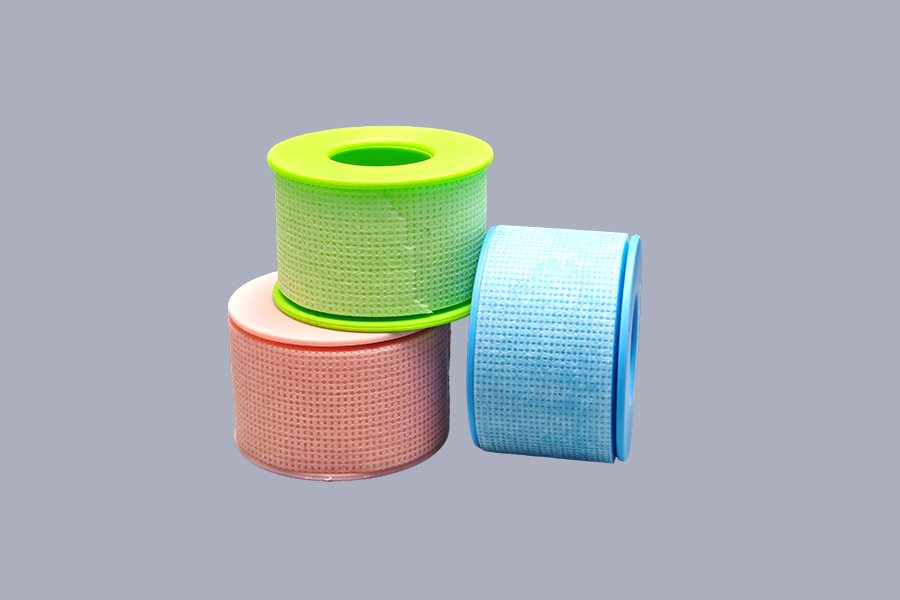 Custom 2.5cm×5m Easy-peel Silicone Tape with Plastic Cover Suppliers, Company - SUZHOU TEXNET CO., LTD. - China 2.5cm×5m Easy-peel Silicone Tape with Plastic Cover Suppliers and Company, Custom 2.5cm×5m Easy-peel Sili...View Product →
Ask suppliers whether the product is sterile or non-sterile, how many times the adhesive remains effective after washing, and whether the material meets basic skin compatibility testing. Those details make the difference between a product that actually helps patients and one that creates compliance problems.
Bottom line
Silicone sheets help scars by restoring moisture balance, reducing mechanical tension, and creating a stable environment for collagen remodeling. They are most effective when started after wound closure and worn consistently for several months. While they cannot eliminate a scar, they are one of the few non-invasive treatments with strong clinical support. For healthcare organizations, choosing a reliable, medical-grade silicone product and educating patients on proper use are the two factors that most directly improve outcomes.