English
 Français
 Español
 Português
 عربى
عربى 日本語
日本語 한국어
한국어 русский
Advances in Skin Wound Care: Modern Materials, Dressings, and Clinical Trends
Content
- 1 Why Wound Care Is Accelerating Right Now
- 2 From Dry to Moist: The Change That Started Everything
- 3 Dressing Materials and Designs That Moved the Needle
- 4 Fixation Is No Longer an Afterthought
- 5 Where Technology Is Taking Wound Care Next
- 6 Matching the Dressing to the Wound
- 7 A Practical Checklist for Choosing and Changing Dressings
- 8 What This Means When Buying at Scale
- 9 Looking Ahead
Skin is the body's most exposed organ and its first line of defence. Every cut, burn, surgical incision or pressure ulcer starts a race between repair and infection, and the tools available to win that race have changed faster in the past fifteen years than in the previous fifty. Advances in skin wound care now draw on materials science, microbiology, device engineering and data, and they reach far beyond the hospital ward into clinics, pharmacies, sports clubs, veterinary practices and family first aid kits.
This article looks at where modern wound care stands today, which changes genuinely improve outcomes, and how sourcing teams can turn those ideas into products that nurses and patients actually want to use.
Why Wound Care Is Accelerating Right Now
Three pressures are pushing the field forward at the same time. First, the patient population is shifting: ageing societies, rising diabetes prevalence and more complex surgery mean more chronic wounds such as diabetic foot ulcers, venous leg ulcers and post-operative breakdowns. Second, antimicrobial resistance has moved prevention, not just treatment, to the top of the agenda. Third, care keeps migrating out of hospitals. Patients go home sooner, so dressings must be simple enough for a community nurse or a family member to apply correctly, and forgiving enough to tolerate a few hours of imperfect technique.
Add steady cost pressure and the direction of travel becomes obvious: fewer dressing changes, fewer complications and fewer readmissions. Every meaningful advance in skin wound care today can be traced back to one of those three goals.
From Dry to Moist: The Change That Started Everything
For most of the twentieth century, wounds were kept dry and left to scab. Research from the 1960s onward showed that a moist wound bed speeds epithelialisation and reduces scarring, and that single insight still underpins almost every modern dressing. The difficulty has always been balance. Exudate left to pool macerates the surrounding skin; exudate removed too aggressively leaves a wound bed that dries out and re-injures with every change.
The practical answer has been a generation of products that manage fluid directionally, holding moisture at the wound surface while keeping the periwound skin dry. That shift explains why wound dressings now play a role across modern healthcare that goes well beyond simple coverage: they shape the biology of healing itself.
Dressing Materials and Designs That Moved the Needle
Polyurethane Foams and Films
Polyurethane dressings were early proof that a synthetic material could outperform gauze on exudate management. Today's versions are thinner, more breathable and far more conformable, so they sit comfortably over joints and awkward contours. A well-designed foam absorbs moderate exudate, maintains a moist interface and allows a visual check without disturbing the wound bed.
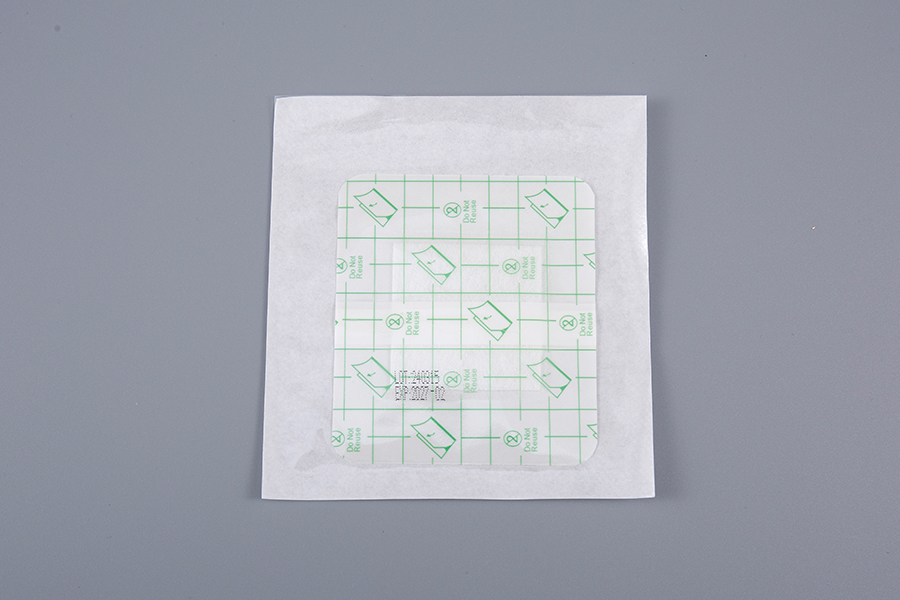 Transparent Waterproof PU Wound DressingOur PU wound dressing is designed for the dressing of small wounds and for use in transfusion. By covering the wound with the PU dressing, PU has excellent elasticity ...View Product →
Non-Woven and Adhesive Dressings
Non-woven adhesive dressings have quietly become the workhorse of everyday wound care. They are light, breathable, low-cost, available in a wide range of sizes, and they suit the superficial cuts, abrasions and small post-operative wounds that make up the majority of dressing changes in clinics and homes. The engineering detail that matters most is the adhesive: skin-friendly formulations hold firmly on dry skin yet lift without stripping the surrounding tissue.
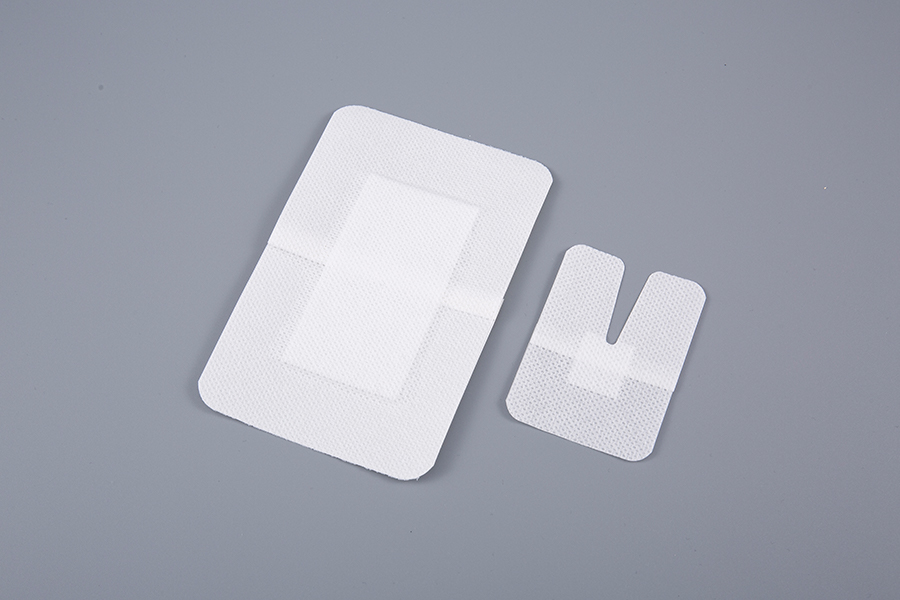 Adhesive Non Woven Wound DressingOur Adhesive Non-woven Wound Dressing is designed for comfort and convenience during usage. The Wound Dressing consists adhesive border that helps the dressing to stay...View Product →
Hydrocolloids and Hydrogels
Hydrocolloids remain a favourite for low to moderate exudate and for protecting intact skin at risk of breakdown. The same material family has crossed into consumer skin care, where hydrocolloid patches are now sold for blemishes and minor skin irritation. Hydrogels work in the opposite direction, donating moisture to dry, sloughy or necrotic wounds and supporting gentle autolytic debridement without sharp instruments.
Antimicrobial Options
Silver, iodine and PHMB are now delivered through dressings engineered to release their active agent in a controlled way, so bioburden can be suppressed over several days rather than a few hours. The clinical message accompanying these products is restraint: use an antimicrobial where there is a real indication such as spreading infection or a high-risk wound, and step down once the wound bed is clean and granulating.
Silicone Interfaces
Perhaps the most quietly significant advance is soft silicone. Silicone contact layers and silicone gel adhesives grip moist skin but release from a healing wound bed, so dressing changes stop tearing away new epithelium. Patients notice the difference immediately, and clinicians see fewer painful changes and less periwound trauma.
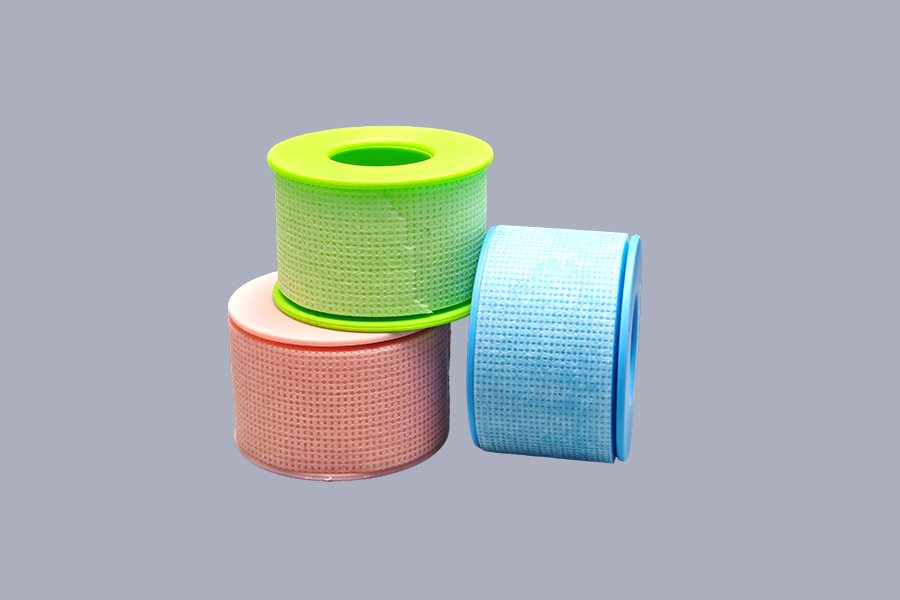 2.5cm×5m Easy-peel Silicone Tape with Plastic Cover2.5cm×5m easy-peel silicone tape is designed for gentle, versatile use.View Product →
Fixation Is No Longer an Afterthought
For years, fixation was treated as the least interesting part of wound care. That has changed. Medical adhesive related skin injury is now a recognised complication in its own right, and the products designed to prevent it have matured quickly. Microporous paper tapes, non-woven fixation tapes, stretch fabrics and silicone adhesives allow secure anchoring with predictable, gentle removal. In compression therapy, cohesive and elastic bandages deliver graded pressure that stays in place through movement, while tubular and conforming bandages hold dressings over joints without restricting circulation.
The lesson for product selection is simple: the dressing and the fixation are one system. If the tape fails, the dressing fails, and if the tape damages skin, the clinician has solved one problem and created another.
Where Technology Is Taking Wound Care Next
Several emerging directions are worth watching. Colour-changing and sensor-enabled dressings can signal rising bioburden or changes in moisture, temperature and pH, allowing earlier intervention between scheduled visits. Portable negative pressure therapy has moved from the operating theatre into home care. Electrical stimulation, photobiomodulation and ultrasound devices are being used as adjuncts for stubborn chronic wounds. Cultured skin substitutes, growth factor products and bioprinted constructs offer hope for burns and large defects, while AI-assisted wound imaging helps clinicians measure area, track healing trajectory and document objectively.
None of these replace the fundamentals. A clean wound bed, controlled exudate, good nutrition and pressure offloading still determine most outcomes. Technology simply helps clinicians see problems earlier and act with more precision.
Matching the Dressing to the Wound
With so many categories available, selection often comes down to a short set of questions: how much exudate, is there infection, how fragile is the surrounding skin, and how often can the dressing realistically be changed? The table below summarises where each common category earns its place.
| Dressing category | Typical wound type | Main advantage | Points to watch |
|---|---|---|---|
| Transparent film | Superficial, low exudate, skin protection | Waterproof and allows visual checks | Not suitable for draining or infected wounds |
| Polyurethane foam | Moderate to high exudate, granulating wounds | Absorbs fluid and keeps a moist interface | Always needs secure fixation |
| Hydrocolloid | Low exudate, intact skin at risk | Comfortable, forms a protective gel | Odour on removal, avoid if infected |
| Hydrogel | Dry, sloughy or necrotic wounds | Donates moisture and supports debridement | Requires a secondary dressing |
| Silicone contact layer | Fragile skin, burns, graft sites | Atraumatic removal | Needs an absorbent cover on top |
| Silver or PHMB dressing | Wounds with localised bioburden | Sustained antimicrobial action | Limit duration and confirm the indication |
| Paraffin gauze | Donor sites, minor burns | Does not stick to the wound bed | Not absorbent on its own |
| Non-adherent pad | Sutured wounds, abrasions | Simple and economical coverage | Change frequency still matters |
A Practical Checklist for Choosing and Changing Dressings
Whatever the product catalogue says, good decisions still follow a repeatable routine.
- Assess the wound bed, exudate level, infection signs and periwound skin before opening any package.
- Set one clear goal for each dressing change, whether that is debriding, absorbing, protecting or sealing.
- Choose the least adhesive product that will stay in place for the planned wear time.
- Match dressing size to the wound with a margin, not the other way round.
- Document the change, the wear time and the appearance, then review the plan at fixed intervals.
- Keep the fixation tape and the dressing as a matched pair so removal stays gentle.
What This Means When Buying at Scale
From a procurement perspective, the modern wound care portfolio looks very different from a simple gauze list. Buyers now weigh sterile and non-sterile options, dressing sizes against real wound shapes, shelf life, packaging integrity, and whether a product integrates cleanly into a procedure kit. Kit-based purchasing is growing quickly because it reduces stock-keeping units, shortens set-up time and lowers the risk of a missing component during a dressing change. Private label and customised size programmes are equally common in retail channels, where wound plasters and adhesive dressings sell in volume to pharmacies, supermarkets and first aid suppliers.
For distributors and hospital buyers, the practical priorities are consistent specifications between batches, clear labelling of material and sterility, and a supplier who can combine dressings, tapes, gauze and PPE in one shipment. That combination is what makes a catalogue genuinely useful rather than merely long.
Looking Ahead
Advances in skin wound care are unlikely to arrive as a single breakthrough. They will come as steady refinements: adhesives that respect fragile skin, foams that handle exudate more efficiently, sensors that warn earlier, and kits that make correct technique easier to follow. The clinicians who do best are rarely the ones chasing the newest product. They are the ones who assess carefully, choose a dressing that matches the wound, and change it for a reason. Suppliers who understand that reality, and can back it with dependable products and honest specifications, will keep earning their place in the wound care supply chain.