English
 Français
 Español
 Português
 عربى
عربى 日本語
日本語 한국어
한국어 русский
Bandage for Fingertips: How to Choose, Apply and Source Finger Dressings
Content
A cut on a fingertip is small, but it is rarely quiet. The pad of the finger flexes dozens of times an hour, meets water every time you wash your hands, and absorbs the full force of every grip. That is why a bandage for fingertips fails more often than almost any other dressing: not because the injury is serious, but because a flat strip plaster was never shaped for a rounded, tapering finger. At Suzhou Texnet we supply disposable wound care products to hospitals, pharmacies, distributors and first aid brands, and we have watched the same problems come up again and again. This guide collects what we have learned about choosing, applying and sourcing fingertip bandages.
Why Fingertips Are So Difficult to Bandage
Three things work against you on a finger. First, the shape: the fingertip is domed and tapered, so a rectangular plaster has nowhere to lie flat. Second, the movement: the distal joint and the pad bend with almost every task, and each bend pushes the edges of the dressing outward. Third, the moisture: the palm and finger pads carry a dense concentration of sweat glands, and hands are washed far more often than any other part of the body.
There is also a clinical point that matters as much as comfort. When a strip plaster is wrapped around a fingertip, wrinkles gather along the sides. The adhesive lifts first at those wrinkles, and a lifted edge is not simply untidy — it creates a channel where water, soil and bacteria can travel under the dressing and sit against the wound.
Fingertip injuries are among the most frequent hand injuries in kitchens, workshops, warehouses, gardens and clinics, which is exactly why the format deserves more thought than it usually gets. A dressing that stays in place is a dressing that protects the wound and does not need to be replaced four times a day.
The Main Types of Bandage for Fingertips
Not every fingertip wound calls for the same product. The four families below cover the great majority of retail, clinical and workplace needs, and most buyers end up stocking at least three of them.
Fingertip Dressings
The fingertip dressing, sometimes called a finger bob, is the only format designed from scratch for the tip of a finger. It is a teardrop-shaped piece of material with an absorbent pad in the centre and a narrow tab on each side. You lay the pad over the wound, fold the tab over the tip and cross the ends at the base of the finger. The shape does the work, so there is no bunching and no guessing about angles. Common sizes are 3.5 x 3.5 cm for small cuts and 5 x 5 cm for larger fingers and thumbs. Sterile, individually wrapped versions are the norm for clinics and first aid rooms, while bulk packs suit repackaging and retail programmes.
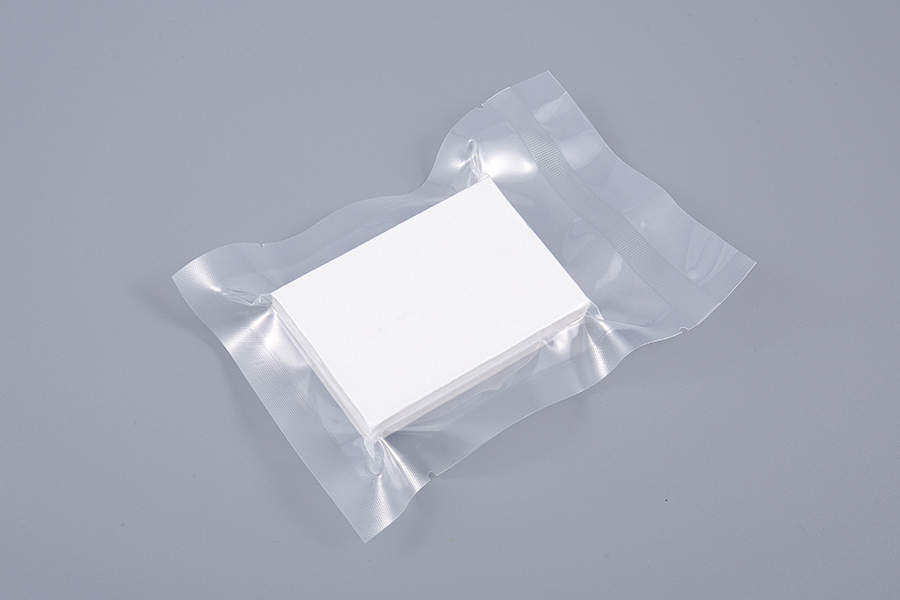 Prevents Sticking 5x5cm Finger Dressing5*5cm finger dressing is perfect for application on different types of cuts and injuries on the finger. It could effectively prevent secondary injury to the wound, pro...View Product →
Knuckle and Finger Bandages
A cut over the knuckle or along the side of a finger needs width and stretch rather than a domed shape. Knuckle and finger bandages are usually hourglass-shaped and built from a soft, stretchy woven or nonwoven material that follows the joint instead of fighting it. Fabric backings are the better choice here: they conform, they breathe, and they tolerate the constant flexing that a stiff polyethylene film cannot. This format is a staple for workshops, sports clubs and pharmacies because one size covers a wide range of small wounds.
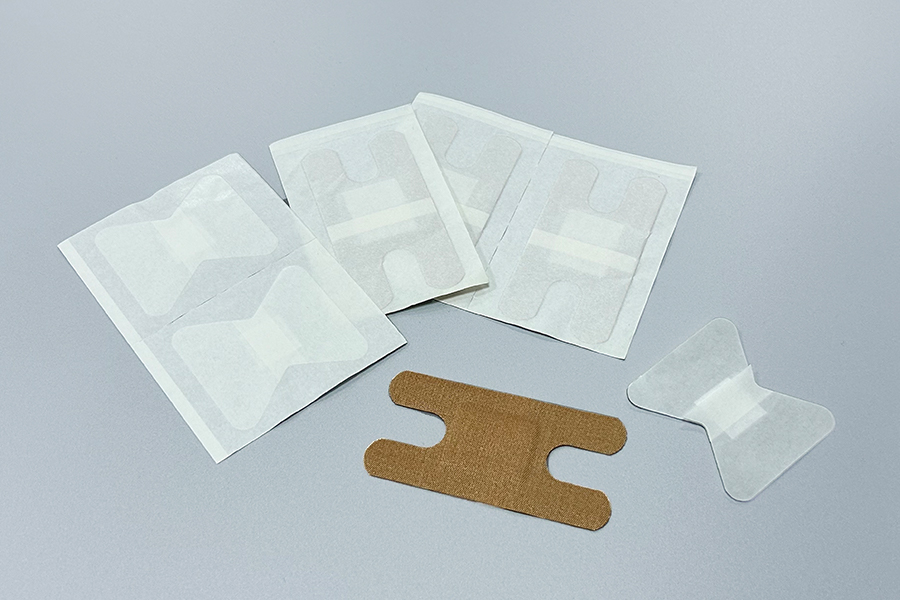 Joint Protection Fabric Knuckle&Finger BandagesFabric Knuckle Finger Bandages are specially designed adhesive bandages that provide secure and flexible protection for hard-to-cover areas like knuckles and fingers. ...View Product →
Round Plasters and Butterfly Closures
Round plasters, typically 25 mm in diameter, handle puncture wounds, small blisters, splinters and injection sites. They are fast to apply, but because they are not shaped to fold, they should be reserved for flat areas of the finger rather than the very tip. Butterfly closures solve a different problem: they hold the edges of a clean, straight laceration together. They have no absorbent pad, so on a fingertip they work best as a first layer under a second dressing that manages any bleeding.
Cohesive and Self-Adherent Wraps
A cohesive bandage does not stick to skin — it sticks to itself. Cut a 5 cm wide roll into short strips, wrap once over the fingertip pad and anchor the tail around the base of the finger. This is a good option when a patient reacts to acrylic adhesives, and it also provides light pressure. The limitation is water: once a cohesive wrap is soaked, it loses most of its grip, so it is a poor choice for food handlers and anyone working with wet hands all day.
| Format | Typical size | Best for | Water resistance |
|---|---|---|---|
| Fingertip dressing (teardrop) | 3.5 x 3.5 cm; 5 x 5 cm | Finger pad, nail edge, thumb tip | Moderate; depends on adhesive |
| Knuckle and finger bandage | Approx. 7.5 x 3.8 cm | Knuckles, joints, side cuts | Moderate to good |
| Round plaster | 25 mm diameter | Punctures, splinters, small blisters | Good in film versions |
| Butterfly closure | Approx. 10 x 45 mm | Holding a straight cut closed | None; not absorbent |
| Cohesive wrap strip | Cut from a 5 cm x 4.5 m roll | Light pressure, adhesive sensitivity | Poor when soaked |
| Waterproof film plaster | Various shapes and sizes | Washing, dishes, food handling | High |
How to Apply a Fingertip Bandage So It Stays On
Technique explains a large share of the failures we hear about, and it is easy to teach. These six steps cover almost every situation.
- Wash your hands, then clean the wound and the surrounding skin, and pat the area completely dry. Adhesive will not bond to damp skin.
- Choose a dressing that covers the wound with about a centimetre of margin on every side.
- Place the absorbent pad directly over the wound without touching the pad surface with your fingers.
- For a teardrop dressing, fold the tab over the tip and cross the ends at the base of the finger. For a strip plaster, angle it diagonally across the tip rather than straight around the finger.
- Press the adhesive down firmly for ten to fifteen seconds. Pressure and body heat activate most pressure-sensitive adhesives, and this single step makes a visible difference to how long the dressing holds.
- Change the dressing at least once a day, and sooner if it becomes wet, soiled or loose. Check the skin for redness or irritation each time.
What Professional Buyers Should Compare
When fingertip bandages are purchased in volume, the differences that matter are rarely visible on a product photo. These are the points we walk through with every buyer who contacts us.
- Sterility: sterile, individually wrapped fingertip dressings for clinical and first aid use; bulk non-sterile packs for workplace refill and retail repackaging.
- Adhesive chemistry: acrylic adhesives give strong initial tack, zinc oxide plasters are traditional and firm, and silicone adhesives are gentle on fragile or repeated-use skin.
- Backing material: polyethylene film for water resistance, fabric and nonwoven for conformity and breathability, polyurethane film for a thinner, more flexible barrier.
- Balance of breathability and water resistance: a dressing that keeps water out but traps sweat can macerate the skin, so the two properties should be matched to the end user.
- Latex-free construction: increasingly a purchasing requirement rather than a preference for hospitals and food processing sites.
- Size range and pad thickness: a narrow size list forces users to improvise, which is how dressings fail.
- Packaging format: dispenser boxes, bulk cartons, individual sachets and private label artwork all affect handling time and shelf appeal.
- Shelf life and storage: adhesives age, so check production dates and store cartons away from direct sunlight and heat.
- Customisation: custom sizes, custom pad shapes and printed backing film are all achievable for established programmes.
Choosing a Supplier Who Understands Finger Wounds
A fingertip bandage is a small item with a long specification list, and the supplier you choose shapes everything from your replenishment cycle to your packaging. We recommend asking four questions before placing a first order: which adhesives and backings are available, which sizes can be held in stock, whether custom sizes and private label are supported, and what documentation accompanies each shipment.
Because the same buyer usually stocks first aid supplies alongside fingertip dressings, it helps to plan the category together rather than item by item. We cover the wider picture in our guide to first aid bandages for everyday and emergency care, and our first aid bandage range shows how the formats fit together in a single order. Water resistance is the property buyers ask about most often, since so many fingertip injuries happen to people who wash their hands constantly.
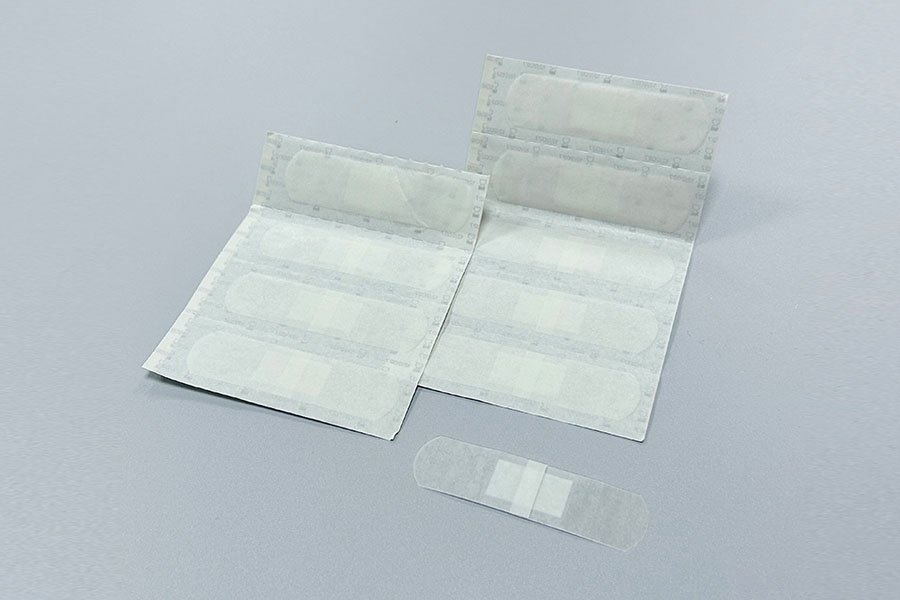 Shower Swimming Available Waterproof BandagesWaterproof Bandages are ultra-durable, moisture-resistant adhesive dressings designed to provide reliable wound protection even in wet conditions. Made from a flexible...View Product →
Frequently Asked Questions
Are fingertip bandages waterproof?
Only if the backing is a continuous film rather than a woven or nonwoven fabric. A waterproof film plaster or a waterproof fingertip dressing keeps hand washing and light dishwashing from reaching the wound, but no adhesive dressing should be considered fully submersible for long periods.
How often should a fingertip dressing be changed?
Once a day for a clean, dry wound, and immediately if it becomes wet, dirty or loose. If the dressing keeps coming off within hours, the cause is usually the wrong format or a damp finger at the time of application rather than poor adhesive.
Can an ordinary strip plaster be used on a fingertip?
It can, and often is, but the result is a dressing that wrinkles on the sides and lifts within a short time. Cutting two small snips into each side of the plaster allows it to overlap without bunching, which is a reasonable field solution when nothing else is available.
Should fingertip dressings be sterile?
For a clean cut at home, a clean non-sterile dressing is generally adequate. For clinics, first aid stations, post-operative care and any open wound, choose a sterile, individually wrapped product and handle the pad only by its edges.
Fingertip wounds are small, frequent and stubborn, and the right dressing makes the difference between a wound that heals quietly and one that is re-dressed five times a day. If you are assembling a range for hospitals, pharmacies, retail chains or workplace first aid, our team is glad to talk through shapes, adhesives, sizes and packaging until the specification fits your market.